
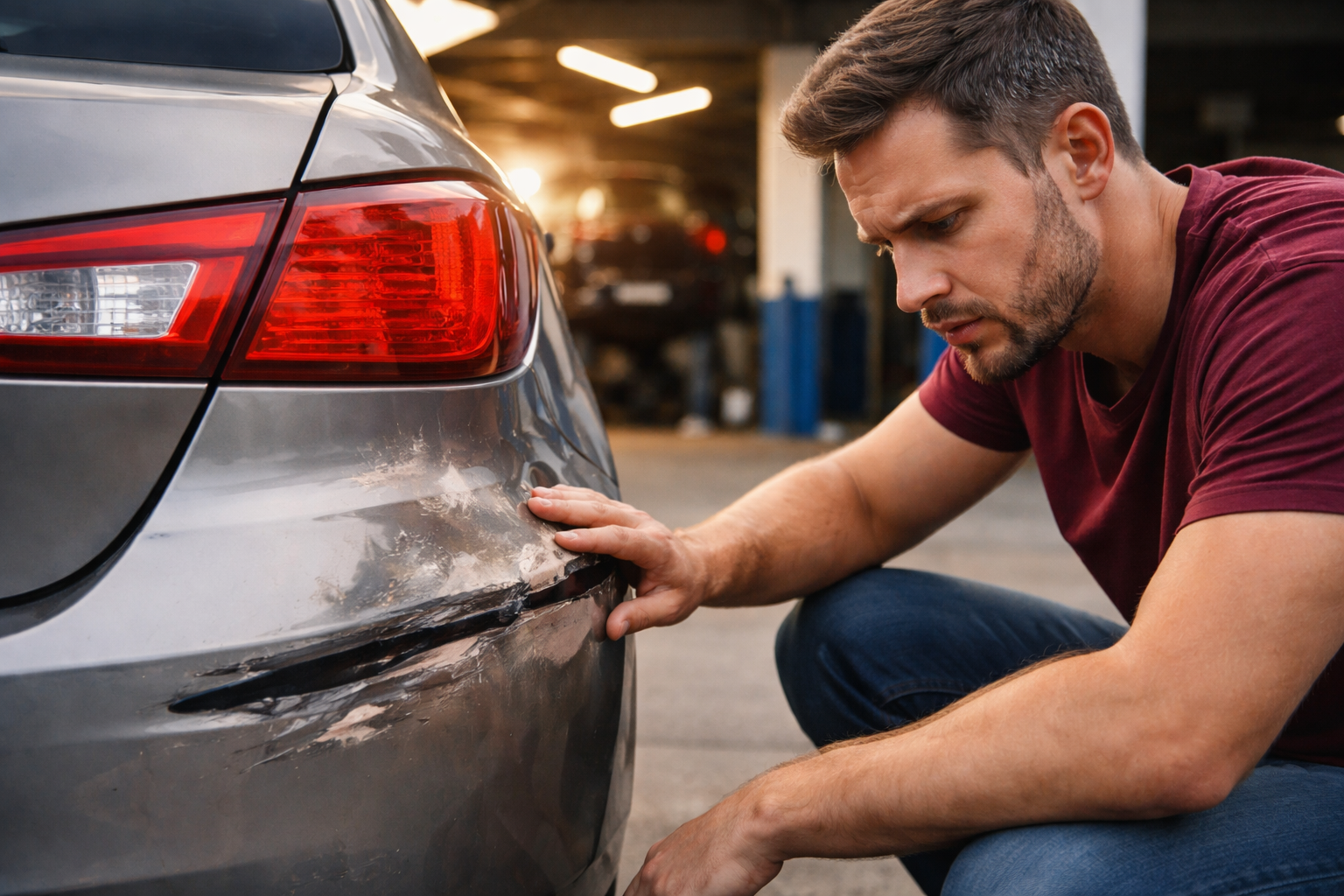
Dealer Failed to Disclose Prior Accident Damage Before Sale was not a phrase I had in my head when I bought the car. At that point, I thought I had already done the hard part. The test drive felt normal, the exterior looked clean, the salesperson moved fast, and the deal was framed like I was lucky to get the vehicle before someone else did. Then a few days later, under better light, I noticed something I could not unsee. One side of the bumper reflected differently. The paint on one panel looked slightly flatter. A trim line was not sitting flush. It was subtle enough to miss during the sale and serious enough to change what the car really was.
Dealer Failed to Disclose Prior Accident Damage Before Sale becomes a completely different kind of problem the second that realization hits. This is no longer about whether you still like the car. This is no longer about whether the dealer was “nice” during the transaction. This becomes a documentation, disclosure, value, and leverage problem immediately. The car you agreed to buy may not be the car you were led to believe you were buying. And if you respond too slowly, the dealer gets time, distance, and excuses.
If you want context for how dealers structure disclosure gaps and pressure buyers to move forward before everything is clear, start here first:
This related guide helps you see how dealer-side information gaps often appear as part of a larger transaction pattern, not as a one-time mistake.
What this problem usually looks like in real life
Dealer Failed to Disclose Prior Accident Damage Before Sale does not always arrive through a dramatic discovery. Sometimes it starts with a body shop telling you a panel has been repainted. Sometimes it begins when you run a vehicle history report after purchase and see an accident entry that nobody mentioned. Sometimes a mechanic points out replaced fasteners, weld marks, overspray, non-factory seam sealer, or bumper support repair. Sometimes an insurance company or appraiser notices prior damage only after a new claim is opened.
What makes this issue so frustrating is that the car can look “good enough” at delivery. The vehicle may drive normally. The dealer may even say they were unaware. But the core issue is not whether the car still drives. The issue is whether material prior damage was hidden, omitted, minimized, or never clearly disclosed before you signed.
If your situation started with visible cosmetic clues
- Mismatched paint texture or color between adjacent panels
- Uneven body gaps around hood, trunk, doors, or bumper
- Overspray on trim, rubber seals, or inner edges
- Newer-looking headlights on only one side
If your situation started with paperwork or data
- Vehicle history report showing accident or damage event after sale
- Auction, salvage, rebuilt, or prior structural note discovered later
- Repair estimate or insurance record that was never mentioned
- Prior disclosure section left blank, vague, or missing
If your situation started after ownership problems began
- Alignment drift, tire wear, suspension noise, water intrusion
- Wind noise after purchase
- Paint peeling earlier than expected
- Airbag or sensor issues tied to previous repair work
Why dealers get away with it
Dealer Failed to Disclose Prior Accident Damage Before Sale often happens because the transaction moves faster than the buyer’s verification process. The customer is focused on monthly payment, trade-in value, financing approval, insurance setup, and delivery timing. The dealer controls the environment, the pace, and most of the paperwork. That imbalance matters.
In many deals, prior damage stays hidden because of one or more of these reasons:
- The damage was repaired before the vehicle reached the lot
- The history report was incomplete or never shown proactively
- The disclosure language was vague enough to avoid attention
- The buyer relied on verbal reassurances instead of written statements
- The buyer assumed “clean title” meant no meaningful prior damage
A clean title does not mean a clean history. That misunderstanding traps a lot of buyers. Dealer Failed to Disclose Prior Accident Damage Before Sale becomes easier for the dealer when the buyer thinks title status alone answers the question.
What the dealer will probably say next
Once you raise the issue, the response pattern is usually predictable. The language changes, but the structure stays similar.
“We didn’t know.”
This is meant to reduce responsibility and turn the issue into bad luck instead of misrepresentation.
“It was minor.”
This is meant to shrink the significance before you have an inspection or appraisal.
“It’s common on used cars.”
This is meant to normalize non-disclosure and make you feel unreasonable.
“The car passed inspection.”
Passing inspection is not the same thing as full and meaningful disclosure.
“If it mattered, it would be on Carfax.”
History databases are useful, but they are not perfect or complete.
“What resolution are you even asking for?”
This is where many buyers lose control because they complain emotionally without making a documented demand.
Dealer Failed to Disclose Prior Accident Damage Before Sale gets harder to solve when you let the dealer define the frame. Your job is not to debate feelings. Your job is to document non-disclosure, prove impact, and demand a specific remedy.
How to sort your situation fast
Not every version of this problem should be handled the same way. The right strategy depends on what kind of damage was hidden, how strong your documentation is, and whether the vehicle’s value or safety has likely changed.
When the damage appears cosmetic but still affects value
- Get a written body shop assessment
- Photograph every mismatch in daylight
- Save the dealer listing, photos, and description
- Focus your demand on non-disclosure and diminished value
When the damage appears structural or safety-related
- Stop treating this like a minor negotiation
- Get an independent inspection immediately
- Ask whether frame, support, restraint, or sensor systems were affected
- Escalate in writing much faster
When the dealer orally admitted they knew
- Send a same-day follow-up email memorializing the statement
- Do not rely on memory later
- Do not keep discussing only by phone
When the report is vague but the physical evidence is strong
- Use inspection photos and written technician notes
- Do not wait for a “perfect” history report before acting
- Build the record around what was not disclosed at sale
What you should gather before sending anything
Dealer Failed to Disclose Prior Accident Damage Before Sale is won or lost on paper long before it reaches an agency, lawyer, or courtroom. You need a file, not just frustration.
- Bill of sale and retail installment contract
- Any buyer’s order, due bill, disclosure addendum, and warranty paperwork
- Screenshots of the online listing and photos used in advertising
- Text messages, emails, and salesperson statements
- Vehicle history report with timestamp
- Independent mechanic or body shop findings
- Photos of paint mismatch, panel issues, underbody signs, welds, gaps, or overspray
- Any appraisal or trade-in valuation showing reduced value
The more your evidence moves from opinion to records, the faster the power balance changes.
If your dispute starts turning into a contract or post-signing terms problem too, this mid-funnel read fits naturally:
This related article is useful when the dealer’s paperwork behavior suggests a broader pattern of concealment or transaction manipulation.
What resolution actually makes sense
Dealer Failed to Disclose Prior Accident Damage Before Sale should not be approached with a vague “please make this right.” That language sounds reasonable, but it gives the dealer room to stall and downgrade the issue.
Usually, realistic remedies fall into a few lanes:
Lane 1: Unwind the deal
Best fit when the damage is serious, value impact is substantial, or structural repair history changes the nature of the vehicle you believed you were buying.
Lane 2: Diminished value compensation
Best fit when you want to keep the vehicle but not absorb the hidden loss alone.
Lane 3: Repair plus written warranty extension
Best fit when unresolved repair quality or latent damage risk is the main concern.
Lane 4: Down payment, trade, and financing cleanup
Important when the problem now touches loan structure, payoff, or title/registration consequences.
Dealer Failed to Disclose Prior Accident Damage Before Sale often becomes more expensive over time because resale value is not the only issue. Insurance discussions, future trade-in offers, lender perception, and later mechanical complications can all stack on top of the original concealment.
What you should say in your written demand
Your written demand should be calm, direct, and highly specific. It should identify the vehicle, the date of sale, the non-disclosed damage, the evidence you now have, and the exact remedy you want. Do not write five angry pages. Do not threaten ten agencies in the first paragraph. Do not make claims you cannot support.
A strong demand usually does four things:
- States that prior accident damage was not disclosed before purchase
- Explains how and when you discovered it
- Lists attached evidence
- Demands a resolution by a clear deadline
Specificity creates pressure. Vagueness creates delay.
Mistakes that quietly ruin strong claims
Dealer Failed to Disclose Prior Accident Damage Before Sale can be a strong dispute and still fall apart because of buyer mistakes after discovery.
- Waiting weeks before documenting the issue
- Relying only on calls instead of email or certified mail
- Accepting a verbal promise to “look into it”
- Getting only a casual inspection with no written notes
- Letting the dealer choose the only inspector
- Posting publicly before preserving a private evidence trail
- Demanding an unrealistic outcome without proof of value impact
One of the biggest errors is treating the issue like a normal customer service complaint. This is not mainly about satisfaction. It is about what was represented, what was omitted, and what loss followed.
How to think about value, not just damage
Many buyers make the mistake of focusing only on whether the car can still be driven. That is too narrow. Dealer Failed to Disclose Prior Accident Damage Before Sale can matter even when the vehicle seems drivable, because the undisclosed history can reduce market value, create distrust in future resale, raise concern about hidden repair quality, and trigger longer-term ownership costs.
If the dealer sold the car like a clean, straightforward used vehicle, but it had meaningful prior accident repair history that a reasonable buyer would want to know, then the problem goes beyond appearance. That missing information may have altered your decision, your negotiating position, or the price you were willing to pay.
Key Takeaways
- Dealer Failed to Disclose Prior Accident Damage Before Sale is a disclosure problem first and a repair problem second
- Clean title does not automatically mean no significant prior damage history
- Independent inspection and written records matter more than verbal reassurances
- Early documentation increases leverage dramatically
- The right remedy depends on whether the issue is cosmetic, structural, value-based, or financing-connected
FAQ
Can I still have a strong claim if the car drives fine?
Yes. A car can drive normally and still have undisclosed prior damage that affects value, resale, or repair risk.
What if the history report did not show the accident until later?
That can still support your timeline, but physical inspection and saved listing evidence are also important.
What if the dealer says the damage was minor?
Do not accept their label without an independent written opinion. “Minor” is often used to shrink the dispute before the facts are established.
Should I let the dealer inspect it first?
You can allow that later, but get your own independent assessment first so you are not building the case only through their narrative.
What should I do today?
Photograph everything, order or save the history evidence, get an independent inspection, and send a written demand without delay.
Recommended next reading
If the dealer starts denying responsibility, minimizing the issue, or trying to push the blame elsewhere, read this next before the conversation shifts further in their favor:
This follow-up guide helps you prepare for the next stage if the dealer stops acknowledging the problem and starts defending the transaction instead.
Official source
For official guidance, review the Federal Trade Commission’s used-car dealer guidance here: Buying a Used Car From a Dealer.
Dealer Failed to Disclose Prior Accident Damage Before Sale is one of those problems that gets more expensive the longer it sits. Do not wait for the dealer to define what happened. Do not wait for a call back that never comes. Do not wait until you try to resell the car and someone else tells you what it was worth all along. Document it, inspect it, and put your demand in writing now.
If you already know something was hidden, act like time matters because it does. The strongest position is built in the first days after discovery, when the evidence is fresh, your timeline is clean, and the dealer has not yet had room to turn a non-disclosure problem into a vague disagreement. That is your window. Use it now.