
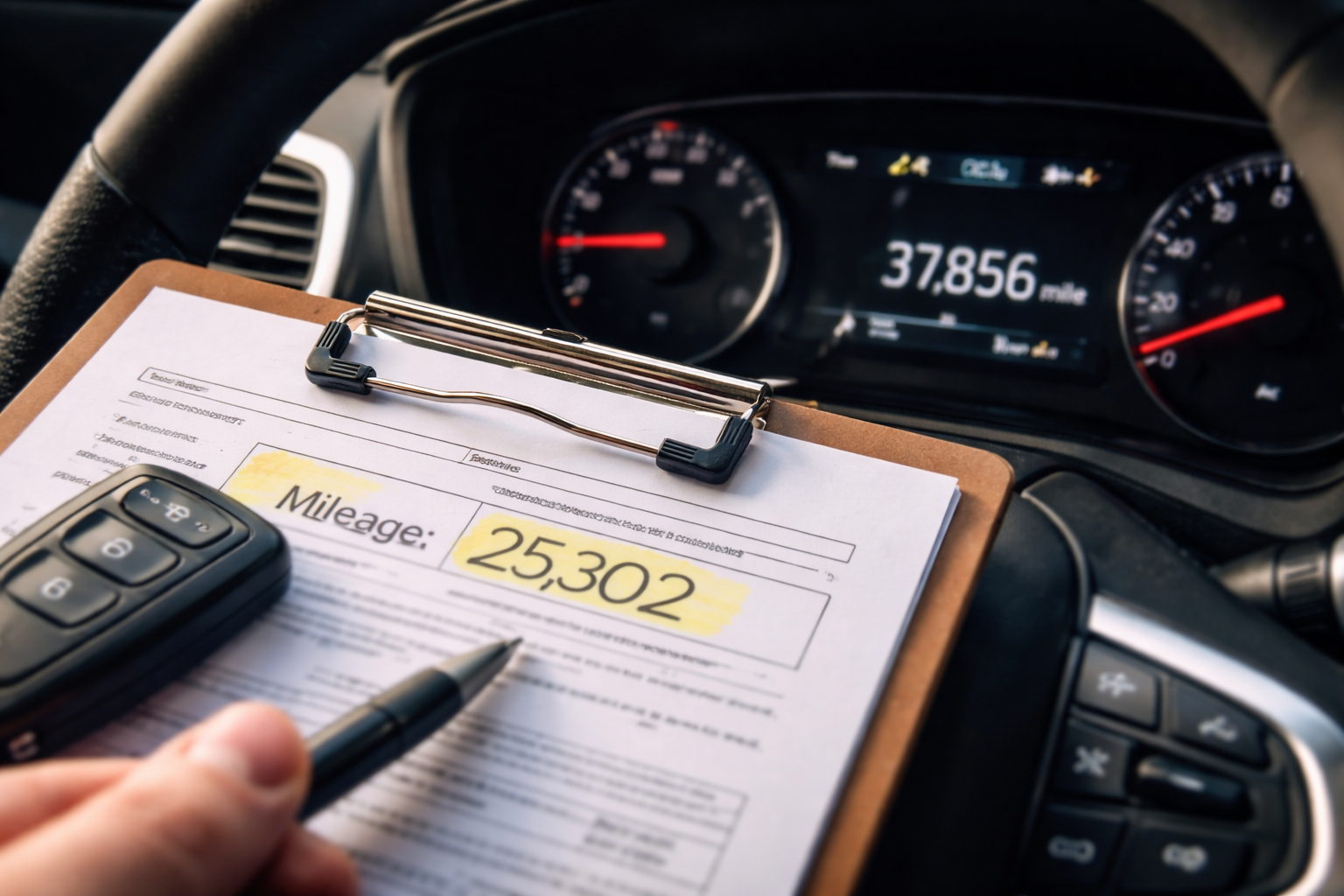
Dealer reported incorrect mileage at sale affecting warranty or resale value was not something I expected to deal with after buying a car. The moment I caught it was ordinary enough that it almost didn’t register. I was sitting in the driveway with the purchase paperwork on the passenger seat, comparing the contract, the odometer on the dash, and a service reminder sticker that had been left in the corner of the windshield. One number was clearly out of line with the others. I looked again because I assumed I had read something wrong.
But I had not read it wrong. The dealership paperwork showed mileage that did not match what the car actually had, and once I saw it, the problem got bigger fast. This was not just a sloppy sales document issue. Dealer reported incorrect mileage at sale affecting warranty or resale value can follow the car into manufacturer warranty records, title paperwork, trade-in offers, future buyer questions, and arguments over whether the vehicle was misrepresented. What makes this problem frustrating is that the dealer may treat it like a minor administrative correction while you are the one left carrying the long-term risk.
If you want context on how documentation problems can start at the point of sale and then snowball later, this nearby article helps frame the pattern:
It shows how weak paperwork control at delivery often creates bigger disputes later.
Why this problem matters more than dealers usually admit
Dealer reported incorrect mileage at sale affecting warranty or resale value sounds narrow, but it touches multiple parts of ownership. Buyers usually think mileage matters only when reselling the car. That is too late. Mileage is one of the core data points used across the life of the vehicle. It affects how service history looks, how warranty administrators evaluate coverage windows, how lenders and insurers interpret records, and how future buyers decide whether they trust the story the car is telling.
If the dealership reported mileage lower than actual, you may later run into questions about why the vehicle appears to have “jumped” in mileage earlier than expected. If the dealership reported mileage higher than actual, you may lose resale value because the paper trail makes the car look more used than it really was. Even when the error began as a simple entry mistake, the damage comes from the record being repeated and relied on by other systems.
This is why dealer reported incorrect mileage at sale affecting warranty or resale value should be handled early, in writing, and with a focus on every place the incorrect number may have been sent.
How mileage mistakes happen behind the scenes
Most buyers assume someone looked at the dashboard and typed the number once. In reality, the number may be entered and re-entered several times by different people. Dealer reported incorrect mileage at sale affecting warranty or resale value often starts because the transaction moves through separate systems that do not perfectly sync:
- inventory management system
- sales desk software
- retail installment contract paperwork
- title and DMV submission workflow
- manufacturer warranty activation records
- service department intake history
- lender or back-office deal jacket processing
That means one wrong entry can spread. A sales associate may use an earlier stock record. A finance manager may copy mileage from a pre-delivery screen. A title clerk may use the wrong field. A service advisor may record a different figure at the first visit. The dealership may later insist that the error is harmless because one document is “close enough,” but close enough is not the same as accurate when later systems compare records line by line.
Dealer reported incorrect mileage at sale affecting warranty or resale value is especially risky when the car had several test drives, was transferred between lots, or sat in dealer inventory while being moved, detailed, or serviced. Those real-world movements create small changes in mileage. If the paperwork uses an earlier number while the car leaves with a later one, the dealer may dismiss the gap as routine. Sometimes it is. Sometimes it becomes the first mismatch in a chain that gets harder to explain later.
What this can affect in the real world
Dealer reported incorrect mileage at sale affecting warranty or resale value can show up in ways buyers do not anticipate at closing. The most obvious impact is resale. A buyer or dealer appraiser may see inconsistent mileage records and lower the offer because they no longer trust the history. But that is only one outcome.
It can also affect:
- warranty claim review timing
- vehicle history consistency
- title transfer processing
- trade-in negotiations
- dealer buyback discussions
- future fraud suspicion even when you did nothing wrong
For example, if a manufacturer system or service history shows one mileage pattern and your purchase contract shows another, a later warranty dispute can turn into an argument about when the clock really started. If a future buyer sees a paperwork mismatch, they may assume there was odometer tampering even when the real issue was just poor dealership reporting. The problem is not only the wrong number — it is the credibility damage created by conflicting records.
Check which version of the problem you actually have
The paperwork shows mileage lower than the car actually had when delivered
- This can make later records look artificially inflated.
- The dealer may claim the difference came from test drives or lot movement.
- You need to confirm whether the lower number was sent only to the contract or also to title, DMV, and warranty systems.
- This version is dangerous because it can trigger suspicion when later records suddenly jump.
The paperwork shows mileage higher than the car actually had when delivered
- This can hurt resale value immediately.
- You may effectively be carrying a car on paper that looks more used than it is.
- The dealer may say the difference is small and does not matter, but trade-in systems and history reports do not always care about that argument.
- You need a written correction because future buyers will focus on the documented figure, not the explanation you remember.
The sales contract is right, but title or registration records are wrong
- This is often harder to fix because it may involve state records.
- The dealership may say the sale paperwork proves the truth, but title-side errors can still create friction later.
- You need to ask exactly what was submitted and on what date.
- This version matters because official state records often carry more weight than your private explanation.
The contract, title record, and service record all show different numbers
- This is the most serious practical version for everyday ownership.
- It suggests the number was entered multiple times by different departments without control.
- You should approach it as a records correction issue across systems, not as one typo on one form.
- You need a written list of which record the dealer agrees is correct and what will be amended.
Dealer reported incorrect mileage at sale affecting warranty or resale value becomes much easier to solve once you know where the incorrect number actually sits.
What the dealer may say and what it usually means
When buyers raise dealer reported incorrect mileage at sale affecting warranty or resale value, the dealer often responds with one of a few familiar lines.
- “It’s just a clerical error.”
- “The difference is too small to matter.”
- “That’s normal from test drives.”
- “Our title clerk can look at it later.”
- “It won’t affect your warranty.”
Sometimes those statements are partly true. But none of them solve your problem by themselves. The issue is not whether the dealer has an explanation. The issue is whether the explanation is turned into a written correction that reaches every place where the wrong number now lives. A calm verbal explanation without a written fix is usually worth very little later.
If you have already seen the dealer minimize one type of documentation problem, this related article shows the same pattern in another context:
It is useful because it shows how back-office data mistakes can outlive the original transaction.
What to gather before you contact anyone
Dealer reported incorrect mileage at sale affecting warranty or resale value is easier to correct when you prepare first and contact second. Before calling or emailing the dealership, gather every record that can anchor the real number.
- photo of the current odometer
- bill of sale
- retail installment contract or purchase agreement
- delivery paperwork
- temporary registration or title application copy
- first service invoice after purchase
- window sticker or inventory listing if available
- any text or email that mentions mileage
If there was a very short time between purchase and your discovery of the mismatch, that helps. It narrows the dealer’s ability to suggest that the discrepancy grew naturally over time. If the number is inconsistent across multiple records from the beginning, that helps too. It supports the argument that dealer reported incorrect mileage at sale affecting warranty or resale value is a documentation-control problem created at delivery, not something caused by your later use.
What to ask the dealer in writing
Keep the message short and direct. You are not trying to write a dramatic complaint. You are trying to pin down facts and corrections. Ask:
- What mileage was recorded on the sales contract?
- What mileage was submitted to the DMV or title processor?
- What mileage was transmitted for warranty or manufacturer records, if any?
- What mileage does the dealer agree was correct at delivery?
- What specific records will the dealer correct, and when?
- Who will provide written confirmation after correction?
Dealer reported incorrect mileage at sale affecting warranty or resale value often gets stalled when the dealer answers only the easiest question. You need answers to all of them. If they correct one document but leave other systems untouched, the inconsistency can survive and come back later.
Where buyers lose leverage without realizing it
There are several mistakes that weaken a good complaint.
- Waiting until resale time to address the mismatch
- Calling repeatedly but never sending a concise written request
- Focusing only on fairness instead of specific records
- Accepting “we’ll note the file” without asking what was corrected
- Failing to save screenshots and copies before paperwork changes
Dealer reported incorrect mileage at sale affecting warranty or resale value is one of those disputes where delay works against the buyer. The longer the bad record sits, the easier it is for others to treat it as established history. Your leverage is strongest when the transaction is still recent and the dealer can still trace what it submitted.
How to protect warranty and resale position now
You do not need to assume the worst, but you should act as if the paper trail may matter later. That means building a clean record now. Send the written request. Save the reply. Ask for corrected documents if appropriate. Ask whether any manufacturer or title-side records were updated. If the dealer says the difference came from test drives or lot movement, ask them to state that in writing and specify the exact corrected delivery mileage they recognize.
Dealer reported incorrect mileage at sale affecting warranty or resale value becomes much less dangerous when you can later show that you raised it promptly, documented it carefully, and obtained written acknowledgment. That does not guarantee every future problem disappears, but it puts you in a much stronger position than relying on memory.
If the issue starts blending into broader sale misrepresentation concerns, this next article is a good follow-up read:
It helps readers think through what to do when the vehicle record itself becomes less trustworthy than promised.
Official source
For a federal overview of odometer-related misconduct and why mileage accuracy matters, see the National Highway Traffic Safety Administration resource here: NHTSA odometer fraud information.
Key Takeaways
- Dealer reported incorrect mileage at sale affecting warranty or resale value is not just a cosmetic paperwork issue.
- The real risk comes from conflicting records spreading across title, warranty, and resale systems.
- You need to identify exactly where the wrong number was reported.
- Written correction matters more than verbal reassurance.
- The earlier you document the problem, the easier it is to protect your position.
FAQ
Can a small mileage difference really matter?
Yes. A small difference may seem harmless, but once different systems carry different numbers, the inconsistency itself becomes the problem.
What if the dealer says it happened because of test drives?
That may explain a narrow difference, but you still need the dealer to confirm the correct delivery mileage and correct any records that stayed wrong.
Can this affect the manufacturer warranty?
It can, especially if warranty or service records later appear inconsistent. The safest move is to document the issue early and ask whether any warranty-side record needs correction.
Should I worry about resale now if I am not selling soon?
Yes. Dealer reported incorrect mileage at sale affecting warranty or resale value is easier to clean up near the transaction date than years later during a trade-in dispute.
Is this automatically odometer fraud?
Not necessarily. Some situations are poor dealership recordkeeping rather than fraud. But from your standpoint, the practical response is the same: document, verify, and correct the record.
What if multiple documents all show different mileage?
Treat it as a cross-system correction problem. Ask the dealer which number it agrees is correct, which records were submitted externally, and what specific amendments will be made.
Dealer reported incorrect mileage at sale affecting warranty or resale value is the kind of problem buyers are often told not to worry about until it becomes someone else’s reason to deny value, deny trust, or question the record. That is why this is worth handling now, not later. When I first spotted the mismatch, it looked like an annoying detail. The longer I looked at the paperwork, the more obvious it became that the real danger was not the typo itself but the trail it could leave behind.
So pull the contract, compare every mileage reference you have, photograph the odometer, and send a written correction request now. Do not leave this sitting in a folder until the next warranty visit or the day you try to trade the car in. Fix the record while the transaction is still recent enough to be traced and corrected.