
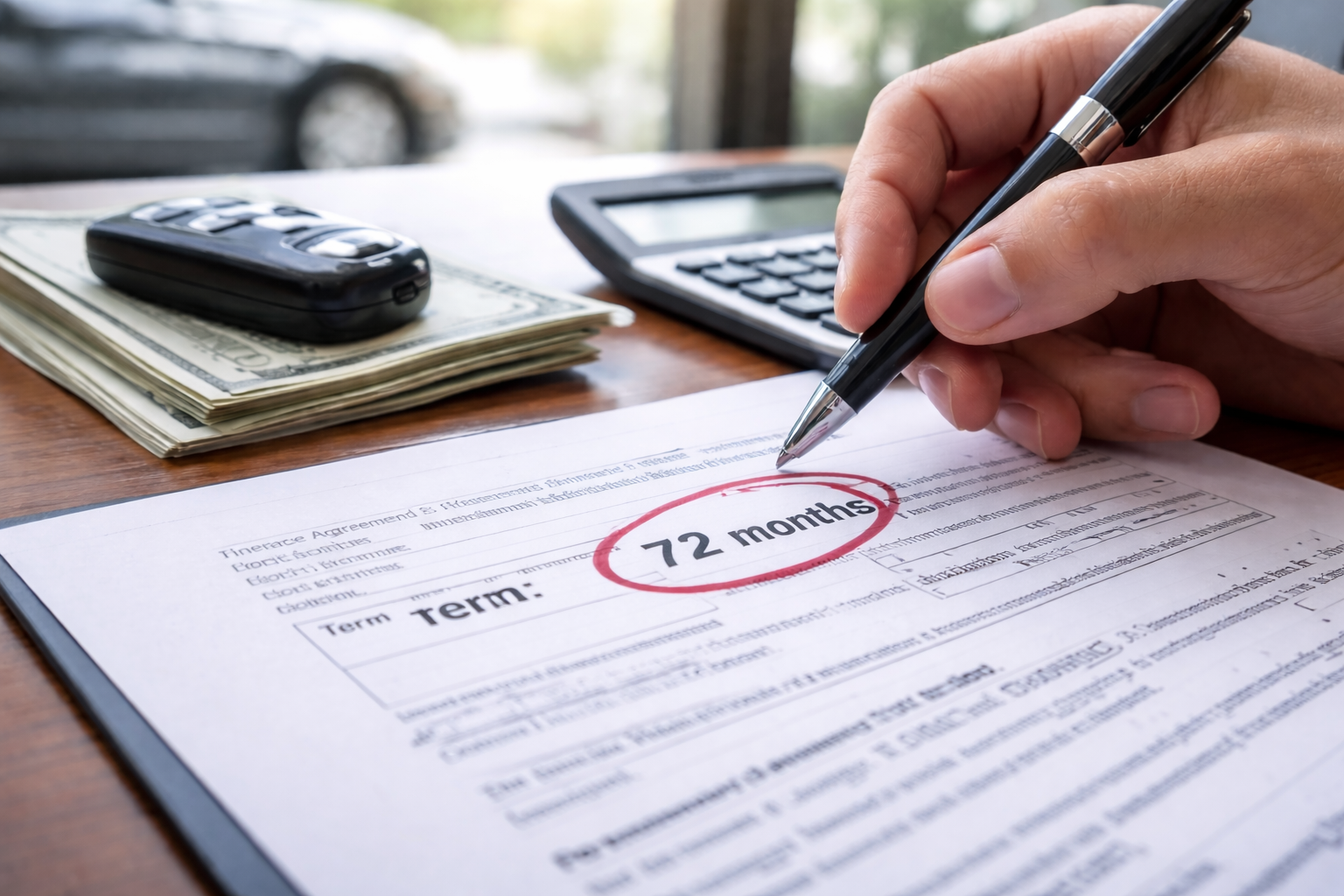
Auto loan term different than agreed — I caught it in the most ordinary moment: paperwork spread across the table, the kind of “I’ll file this later” stack. I wasn’t even looking for a problem. I just wanted to confirm the due date and autopay info.
My eyes landed on the term line and I had that quick, cold pause. We talked about 60 months. I was sure. But the contract said 72. The payment looked “manageable,” which is exactly why this slips past people. Then I did the math, and my stomach dropped just enough to keep me calm. An extra year of interest isn’t a small mistake; it’s a costly outcome.
This is not a “monitor it and see” situation. If you searched auto loan term different than agreed, you’re already in the only phase that matters: the window where fast, precise action can still change the result.
Important (YMYL): This is general consumer information for U.S. auto buyers, not legal advice. If you suspect fraud, coercion, or you’re facing repossession/collections, consider a qualified consumer attorney in your state.
Start Here: Confirm the Term in the Right Place
Before you accuse anyone of anything, confirm exactly what is different. For auto loan term different than agreed disputes, buyers often look at the wrong page.
- Retail Installment Sales Contract (RISC): This is the key document for term, APR, amount financed, total of payments.
- Truth-in-Lending box: Where the term and total finance charge show up clearly.
- Buyer’s order / worksheet: Helpful for context, but not always controlling.
Only the signed RISC and lender funding details decide what you are legally paying.
Also check whether the term changed alone, or whether it changed alongside something else (APR, add-ons, amount financed). A term mismatch is serious by itself, but multiple changes can indicate a broader restructuring.
Quick Self-Check: What Exactly Changed?
Mark the statement that matches you:
- A. “The contract term is different than what we agreed verbally (60 vs 72/84).”
- B. “The term is different, and the monthly payment is also different than expected.”
- C. “The term is different, and I see extra products (warranty/GAP/add-ons) I didn’t expect.”
- D. “The term is different, but the dealer says the lender required it.”
- E. “I already made a payment / the lender account is active.”
Pick your path below based on funding status and timing.
One Hub Guide That Helps If the Dealer Changed Terms After Signing
If the term changed after you signed or after you took the car home, this hub article covers the broader “terms changed after signing” pattern. It’s useful background while you work the term-only steps below.
Read this if your situation feels like a post-signing change:
Why This Happens: The “Payment Target” Trap
Most auto loan term different than agreed problems trace back to one negotiation pressure point: the monthly payment.
Here’s the pattern:
- You mention a payment you want (“I need it around $420”).
- The finance office tries to hit that number even if the structure shifts.
- Extending the term is the fastest lever to pull.
Lower monthly payments can be a disguise for higher total cost. Extending the term may keep the deal alive for the dealership while quietly increasing your total finance charge and keeping you underwater longer.
Sometimes it’s sloppy paperwork. Sometimes it’s “we thought you’d prefer this.” Either way, you fix it the same way: fast, documented, and specific.
The Most Important Branch: Funded or Not Funded?
The single highest-impact question in an auto loan term different than agreed dispute is whether the loan has been funded (finalized) by the lender.
Term Mismatch Action Box
If the loan is NOT funded yet (best scenario):
- Ask the finance office: “Has the contract been funded? Yes or no.”
- Request a rewritten RISC at the originally discussed term.
- If they say the lender won’t approve 60 months, ask for alternatives: higher down payment, different lender, remove add-ons, or unwind the deal.
If the loan IS funded (still fixable, but harder):
- Ask for the lender name, account number, and funding date.
- Call the lender and request the “contract package” they received.
- Dispute the discrepancy in writing to the dealer and ask the lender what correction process exists (some lenders will refer you back, but you want a paper trail).
Funding changes the leverage, not the truth.
What To Say on the Phone (Short Script)
Keep it calm and non-accusatory. The goal is to get to “Yes, we can re-contract” without triggering defensiveness.
- “I’m reviewing my paperwork and the term is not what we discussed.”
- “My contract shows 72 months. We agreed to 60 months.”
- “Please confirm whether the loan has been funded.”
- “If it’s not funded, I’m requesting a corrected contract at 60 months today.”
- “If it is funded, I’m requesting the exact steps to correct the contract and a written response.”
Do not accept “we’ll look into it” without a specific next step and timeline.
If the Dealer Says “The Bank Required 72 Months”
This is common in auto loan term different than agreed calls. It can be true, but it’s not the end of the conversation.
Ask these questions:
- “Did you submit the deal as 60 months originally?”
- “Which lenders were tried at 60 months?”
- “Is the issue the term, the loan-to-value, or the credit tier?”
- “What changes would make 60 months approvable (down payment, removing add-ons, different lender)?”
If the only way to keep the payment low is to extend the term, you deserve to knowingly choose that tradeoff.
When the issue includes APR shifts (often paired with term changes), this mid-article explainer can help you spot the telltale signs:
What To Document (This Is Your Leverage)
For auto loan term different than agreed situations, documentation is not about being dramatic. It’s about being credible.
- Photo of the term line on the signed contract
- Any text/email referencing the intended term or payment structure
- Buyer’s order/worksheet showing the expected term
- Names, dates, and summaries of calls
The strongest disputes are the ones that are easy for a manager to “approve” because the facts are clean.
When You Already Made a Payment
If you’ve already made the first payment, don’t assume you’re trapped. Many buyers stop here. That’s how the term stays wrong.
Do this instead:
- Confirm the lender account is active and funded.
- Request the lender’s copy of the contract package.
- Send the dealer a written correction request (email is fine) with the term mismatch highlighted.
- Ask the dealer whether they can execute a correction, refinance at no cost, or unwind the deal depending on your state and circumstances.
Time hurts you, but payment does not erase a legitimate discrepancy.
Do Not Make These High-Cost Mistakes
- Only focusing on the monthly payment: You might “win” a payment and lose thousands overall.
- Letting the dealer keep it verbal: Get the plan in writing.
- Waiting 2–3 weeks: Your leverage drops as the transaction settles.
- Assuming refinancing is “the fix”: Refinancing can help, but it often costs fees and doesn’t correct the original contract issue.
- Signing a second set of papers without reading: Re-contracting is good only if it truly restores the intended term.
The easiest buyer to ignore is the buyer who sounds uncertain. Be calm, factual, and specific.
Official Reference
If you want a neutral, official overview of vehicle financing concepts and what to pay attention to in auto loan paperwork, the FTC’s consumer guidance is a solid reference point:
Key Takeaways
- Auto loan term different than agreed is urgent because the term silently changes your total cost and risk.
- Ask one question first: Has the loan been funded?
- Term extensions are often used to hit a “payment target.”
- Document the mismatch and request a corrected contract fast.
- Calm, written, specific requests beat emotional calls.
FAQ
Is it normal for an auto loan term to change after I leave?
It happens more than buyers expect, especially with spot deliveries or last-minute lender conditions. But “common” doesn’t mean “acceptable.” If auto loan term different than agreed applies to you, treat it as a correction issue, not a waiting game.
What if the contract I signed really says 72 months?
Then your argument becomes: you were led to believe the term was 60 months and the signing process did not reflect the agreed structure. Documentation matters. Ask the dealer for a solution: re-contract at 60, adjust deal terms so 60 is approvable, or another remedy depending on what happened.
Should I threaten legal action immediately?
Usually no. Start with a clean correction request and a funded/not funded check. Escalate only if the dealer refuses to respond in writing or you see multiple suspicious changes.
Will fixing the term hurt my credit?
A correction request itself does not hurt credit. But missed payments, confusion about the lender, or delays can. Keep payments current while you dispute, unless a professional advises otherwise.
What’s the fastest win scenario?
Unfunded deal + quick call + corrected contract the same week. That is why urgency matters in auto loan term different than agreed situations.
Next Reading and Your Last Step Before You Hang Up
If the dealer stonewalls, refuses responsibility, or tries to run out the clock, you’ll want a firm escalation approach that still stays professional.
Auto loan term different than agreed — My last move was simple: I wrote down the exact term I believed we agreed to, highlighted the contract term that didn’t match, and asked one clean question: “Is this funded?”
That question changed the entire tone of the conversation. Suddenly, it wasn’t about opinions. It was about whether the deal could be corrected now, while the paperwork still had flexibility. Most costly financing issues get “permanent” only because buyers wait.
Do this today, in order:
- Pull your signed RISC and find the term line.
- Take a photo of the term and the TILA summary.
- Call finance and ask whether it’s funded.
- Request a corrected contract at the agreed term (or a clear alternative you choose knowingly).
- Get the next step in writing.
You’re not asking for a favor. You’re asking for the deal you believed you made. And the best time to fix auto loan term different than agreed is before it becomes the loan you carry for the next six years.