
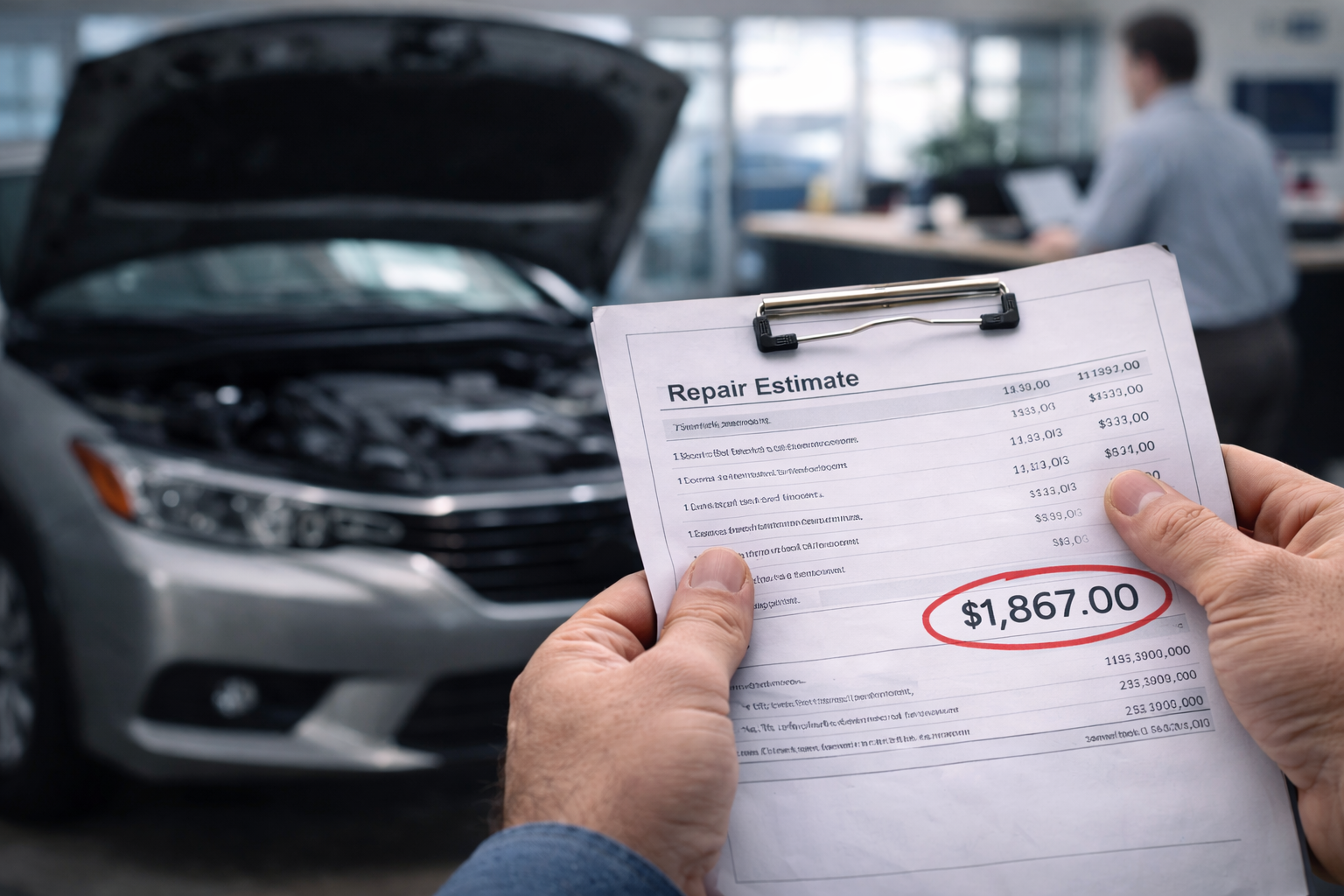
Dealer refused warranty repair was the phrase that snapped me out of “routine service mode.” I had walked in expecting the usual: a quick diagnosis, a warranty approval, a call later in the day saying the part was ordered. Instead, the service advisor slid the paperwork across the counter like this was normal—an estimate that looked more like a down payment than a repair.
I remember scanning for the reason, hoping it was a misunderstanding. The words were polite but firm: “not covered.” No clear evidence, no photos, no explanation that matched what I’d been told when I bought the vehicle. When dealer refused warranty repair happens, your leverage is highest before you authorize customer-pay.
If you’re seeing a pattern where a dealer denies responsibility after diagnosing or touching the car, this hub page helps you recognize the tactics early:
The 2-Minute Reality Check (Before You Argue)
When a dealer refused warranty repair, it usually falls into one of two worlds:
- World 1: The dealer is correct because the warranty truly excludes it.
- World 2: The dealer is making a judgment call because reimbursement is uncertain.
Your job is to force clarity on which world you’re in. If you stay in “vibes and frustration,” you lose. If you demand documented reasons, you regain control.
Before you do anything else, confirm:
- Is the vehicle still within time/mileage warranty?
- Is the issue tied to a covered system (powertrain, emissions, etc.)?
- Is the dealer claiming “cause” (misuse/mods) or “category” (wear/maintenance)?
Why Dealer Refused Warranty Repair Happens So Often
A dealer refused warranty repair decision often has less to do with your story and more to do with dealership incentives. Warranty work pays dealers at manufacturer rates and requires documentation. Customer-pay work is simpler and often more profitable.
Common denial narratives:
- Wear and tear: “This is normal aging.”
- Maintenance neglect: “No proof of services.”
- Aftermarket modifications: “This caused the failure.”
- Environmental damage: “Road debris/water intrusion.”
- No fault found: “We can’t replicate it.”
- Prior repair complicates it: “This isn’t related to our work.”
The key point: the dealer’s statement is not a court ruling. It is a position. Positions can change when the manufacturer gets involved.
Case Split — Identify Your Denial Type (And Your Best Leverage)
CASE A — “Wear and Tear” Denial
They claim the part naturally failed and is excluded.
Leverage: ask for the warranty section that excludes it, and the measurement/photos proving wear (not defect).
CASE B — “Maintenance Neglect” Denial
They claim you missed required service intervals.
Leverage: produce receipts, service history, oil change logs, and ask which exact interval allegedly voided coverage.
CASE C — “Aftermarket Part Caused It” Denial
They point to tint, intake, lift kit, electronics, or non-OEM parts.
Leverage: request written causation explanation. They must connect the modification to the specific failure.
CASE D — “External Damage / Misuse” Denial
They claim impact, water, contamination, or abuse caused the failure.
Leverage: ask for photos, technician notes, and the inspection checklist showing exactly where the damage is.
CASE E — “Could Not Duplicate Concern” Denial
Intermittent issues: rattles, stalling, warnings that disappear.
Leverage: provide video evidence, timestamps, conditions (temperature, speed), and request re-test protocol.
CASE F — Warranty Is Active, But Dealer Pushes Customer-Pay “Just to Start”
They ask you to pay diagnostic/repair now and “maybe reimburse later.”
Leverage: refuse. Ask them to submit to manufacturer for pre-authorization review first.
CASE G — Dealer Claims “Not Covered Because It’s Not Related” After Service
They serviced the car and the same issue (or a related one) returned.
Leverage: focus on continuity: dates, repair orders, symptom match, and ask for a warranty re-check.
Pick your case and stick to that strategy. If you use the wrong framing, they’ll default to “policy” and end the conversation.
What to Do Before You Authorize Anything (This Step Protects You)
When a dealer refused warranty repair, the biggest hidden trap is “accidental consent.” People sign or approve something just to get out of the waiting area.
Do this instead:
- Ask for the denial reason in writing on the repair order.
- Request the technician notes (or a printed summary).
- Ask for photos of the alleged cause (wear, damage, modification).
- Ask which warranty clause they’re relying on.
- Ask if the claim was submitted to the manufacturer or stopped at the dealership level.
If they cannot provide written reasoning, your odds of overturning increase once the manufacturer reviews it.
The Dealer’s Hidden Question (And How to Answer It)
Behind the counter, the dealer is thinking:
“Will the manufacturer reimburse us if we do this?”
If the answer feels uncertain, the denial becomes safer for them.
Your move is to shift the decision from “dealer comfort” to “manufacturer determination.” That’s why the words you use matter.
What to Say (Short Script That Works)
Use calm phrases that force process:
- “Please document the exact reason you’re denying warranty coverage.”
- “Which warranty clause excludes this repair?”
- “Have you submitted this to the manufacturer for review?”
- “I’m requesting a manufacturer case number.”
- “I’m not authorizing customer-pay until the warranty review is complete.”
Short, structured language signals you understand the system.
Your Rights (Official Source, One Only)
If the dealer tries to imply your warranty is void because of a modification, you should know federal warranty law often requires proof of causation.
A warranty is not automatically voided by aftermarket parts. Denials should be specific, documented, and connected to the failure.
When the Problem Comes Back After Service
If the dealer already “fixed” something and the same symptom returned, your dispute posture changes. Repeat failures weaken the “wear and tear” story.
Escalation Ladder (Use This Order)
When a dealer refused warranty repair, escalation should be a ladder, not a leap:
- Dealer Service Manager: request written denial + submission to manufacturer.
- Manufacturer Customer Assistance: open a case, provide repair order photos, request review.
- Second Dealer Opinion: ask another authorized dealer to document findings.
Escalation works best when you bring documents, not complaints.
Mistakes That Make Denials Stick
- Approving customer-pay “just to get it done”
- Leaving without a copy of the repair order
- Arguing verbally without requesting written reasons
- Threatening lawsuits on the first call (it can shut down cooperation)
- Waiting weeks before opening a manufacturer case
The system rewards the person who creates a clean paper trail.
How to Protect Yourself If You Must Drive the Car
If you can’t leave the vehicle and the dealer refused coverage, ask for clarity:
- “Is the vehicle safe to drive?” (request the answer in writing)
- “What damage could occur if I drive it?”
- “What symptoms would require immediate stop?”
This is not legal theater — it prevents blame later if the issue worsens.
Key Takeaways
- dealer refused warranty repair is often a dealership-level decision, not the final word.
- Your leverage is highest before you authorize customer-pay.
- Force written denial reasons, technician notes, and evidence photos.
- Escalate to the manufacturer with a case number and clear documents.
- Repeat failures and documented symptoms strengthen warranty arguments.
FAQ
Can a dealer refuse warranty repair even if my warranty is active?
Yes, but they should provide a specific warranty-based reason and supporting evidence.
Should I pay the diagnostic fee anyway?
Only if it’s clearly separate and unavoidable. If they’re using it as a gateway to customer-pay, request manufacturer review first.
What if they blame an aftermarket part?
Ask for written causation explaining how the modification caused the exact failure.
Does going to another dealer help?
Often. A second documented diagnosis can pressure the first dealer or support manufacturer review.
What matters most in an escalation?
Repair order copies, denial reason in writing, and objective evidence (photos/notes/video).
Closing — What to Do Today
If you’re facing dealer refused warranty repair, don’t treat it like a final verdict. Treat it like a process problem that needs documentation and escalation.
Today, your job is simple: get the denial reason in writing, collect the technician notes, request evidence photos, and open a manufacturer case before you agree to pay.
Make the request in calm sentences. Get the case number. Keep the paper trail clean.
Because the fastest path to a covered repair usually starts with one decision: refusing to pay first until the warranty review is real.