
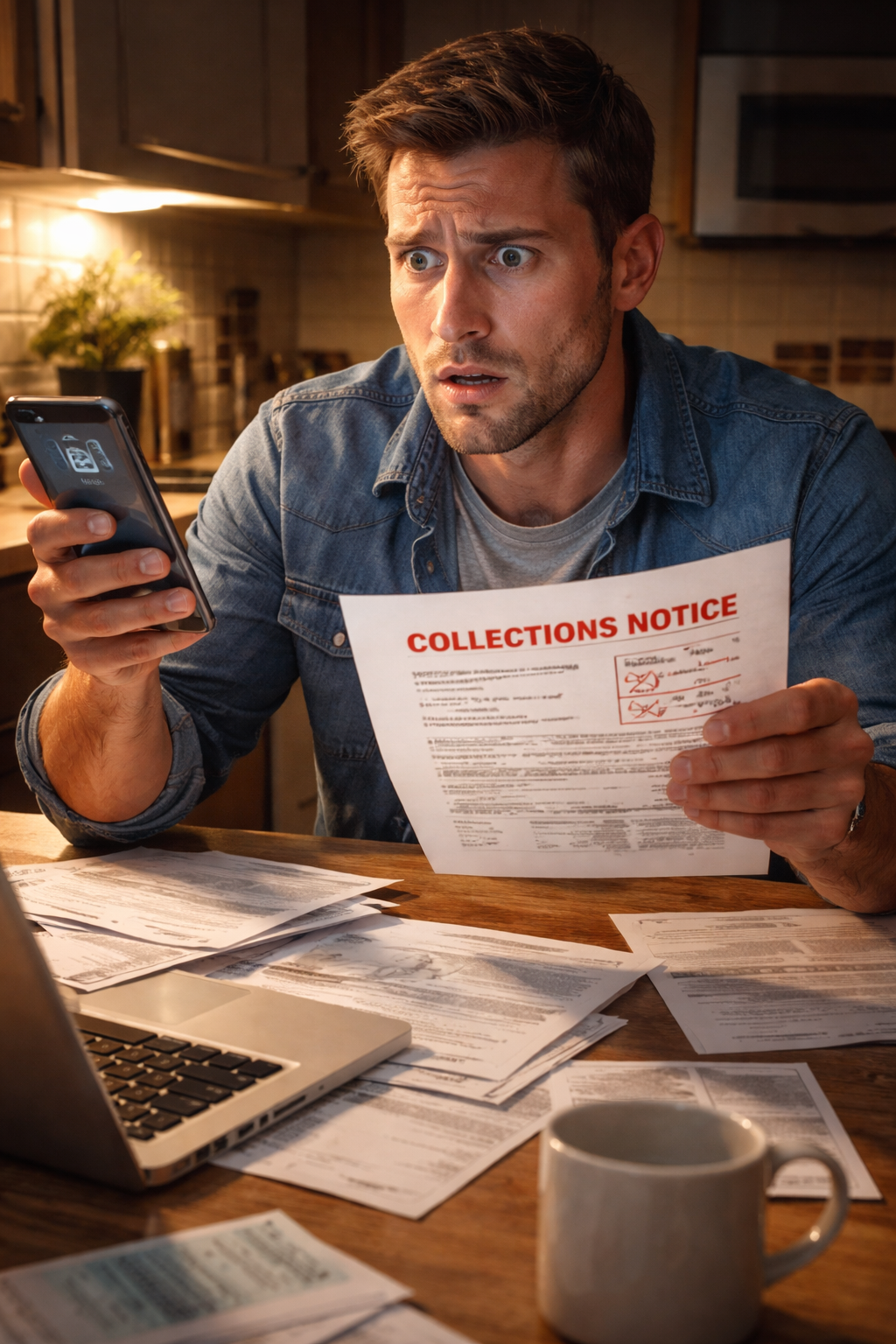
Dealer sent account to collections without notice—I didn’t even learn it from the dealership. I learned it from a credit alert that hit my phone before sunrise. One minute my “open disputes” folder felt like a slow-moving headache, and the next minute it felt like a fire: new collection account, a balance I didn’t recognize, and a note that made it sound final.
I wasn’t angry in a dramatic way. It was more like a cold, quiet panic—because I knew a collections entry can change what lenders see, even if the amount is wrong. If dealer sent account to collections without notice happened to you, what you do next matters more than the story they tell the collector.
If your problem started as a “new fee after we agreed” type dispute, this is the closest background guide on this site (read it fast, then come back here):
The moment it turns into a credit problem
When dealer sent account to collections without notice, the situation stops being only a dealership dispute. It becomes a timing and documentation fight. The collector will act like the balance is settled truth. Credit bureaus may display it before you ever see a letter. And the dealership may suddenly become “hard to reach.”
Your goal is not to win an argument on the phone. Your goal is to force a paper trail that proves either (1) the debt is valid and accurately stated, or (2) it is not—so it can be disputed, corrected, or removed.
Fast self-check before you do anything else
Answer these quickly. This helps you “place” your situation into the right path:
10-minute self-check
- Is the balance tied to service (repair bill, diagnostic, storage, towing)?
- Is the balance tied to financing (rate change, term change, “re-contract” pressure)?
- Is the balance tied to add-ons (warranty, protection package, GAP, accessories)?
- Did you receive any letter from a collector yet?
- Did you recently decline to sign “updated paperwork” after delivery?
- Do you have screenshots, invoices, or a buyer’s order showing a different amount?
If dealer sent account to collections without notice and you’re not sure what the debt is, that’s not unusual. Your first move is designed for uncertainty.
Why dealerships escalate without warning
Dealerships escalate for simple reasons that aren’t about fairness. Unpaid balances sit on their receivables. Disputes take time. Some stores would rather hand it off to a collector and let pressure do the work. If dealer sent account to collections without notice, it often happens right after one of these triggers:
- You disputed a charge in writing.
- You refused to pay a “difference” that appeared after delivery.
- You asked for itemized proof (and the conversation got tense).
- You challenged financing changes after signing.
If your dispute began with financing being “reworked” after signing, this related guide helps you identify the paperwork pattern dealerships use:
Common paths that lead to collections
Below are detailed “paths” that match what people actually experience. Find yours and follow that track. If dealer sent account to collections without notice, the details decide which letters you send and what proof you demand.
Path A: “Service bill ballooned after pickup”
You approved an estimate (or thought you did), then the final invoice was higher. You questioned it. They marked it unpaid and transferred it.
- What to gather: estimate, final invoice, repair order notes, any texts about approval.
- What to watch for: vague line items (“shop supplies,” “misc,” “fees”) and add-on labor that was never authorized.
- High-leverage question: “Show where I authorized this additional work and amount.”
Path B: “Add-on was canceled, but the balance stayed”
You believed an add-on (extended warranty, protection, GAP) was removed or canceled. The dealership kept the charge on the ledger or re-billed it. Then collections.
- What to gather: cancellation email, contract addendum, finance menu, buyer’s order.
- What to watch for: “canceled” verbally but not processed on the backend.
- High-leverage question: “Provide the cancellation processing date and refund/charge reversal confirmation.”
Path C: “They changed the deal after signing”
You signed. Later they said “the bank didn’t approve,” demanded new terms, or claimed you owe the difference. When you refused, they treated it as a debt.
- What to gather: signed retail installment contract, delivery paperwork, lender name, any “rewrite” request.
- What to watch for: pressure to re-sign quickly, threats about repossession or fees, vague “approval issues.”
- High-leverage question: “Where is the written agreement that creates this new balance after the signed contract?”
Pick the path that matches your facts, not the path the dealership tells you you’re in.
What to do in the first 72 hours
If dealer sent account to collections without notice, you need a short, disciplined sequence. This protects your leverage while you’re still gathering proof.
72-hour action plan
- Stop phone-only communication. You can answer calls, but you do not negotiate by phone. Ask for mailing address and email only.
- Get the collector’s full details. Company name, address, phone, account number, the exact claimed amount, and the original creditor name.
- Send a debt validation request. Keep it short. Request proof the debt is yours and the amount is accurate.
- Send a written dispute to the dealership. Ask for itemized documentation and the signed authorization creating the balance.
- Document the timeline. A simple list: date of service/contract, date of dispute, date you learned it hit collections.
Do not “panic-pay” just to remove the stress. If the amount is wrong, paying first can make the situation harder to unwind later.
A realistic script you can use today
Use this when you call the collector to get their address (not to debate):
Phone script (30 seconds)
“Hi. I’m calling to confirm your mailing address and the account number you’re referencing. I’m requesting validation in writing. Please note that I’m disputing the debt and I’m not agreeing to the balance over the phone.”
If dealer sent account to collections without notice, this script keeps you from accidentally admitting facts you haven’t confirmed.
What “validation” should include
Validation is not “we say you owe it.” If dealer sent account to collections without notice, you want proof that connects the balance to you and to a lawful agreement. Reasonable items to request include:
- The name of the original creditor and the date of assignment.
- An itemization of the amount (principal, fees, interest, add-ons).
- Copies of any contract pages or signed authorizations tied to the disputed amount.
- The service invoice and approval record (if it’s a repair-related debt).
When the paperwork is weak, disputes become stronger. Your job is to expose weakness with calm documentation.
Mistakes that quietly destroy your leverage
These are common because people just want the stress to stop:
- Admitting the debt before you see documentation (“Yeah I probably owe something”).
- Paying before disputing when the amount is inaccurate or unauthorized.
- Threatening lawsuits on the first call (it escalates emotions, not outcomes).
- Sending long emotional emails instead of short factual disputes.
If dealer sent account to collections without notice, discipline beats intensity. Short letters. Clear requests. Clean evidence.
If it already shows on your credit report
If dealer sent account to collections without notice and it’s already reporting, you still have options. The key is to avoid “guessing” disputes. Dispute with specifics:
Better dispute framing
- “Amount is inaccurate because the invoice includes charges not authorized in writing.”
- “Debt is disputed and validation has been requested; please investigate documentation.”
- “This account does not match the signed contract amount; requesting itemization and proof.”
Specific disputes force specific investigation. Vague disputes often get vague outcomes.
Official help you can reference
For U.S. consumers, the most useful official starting point is the CFPB’s debt collection resources. It explains your baseline rights and how to handle validation and disputes without escalating risk.
FAQ
Can a dealer send something to collections without calling me first?
Yes, calls aren’t guaranteed. But once collections begins, validation and dispute rules matter. If dealer sent account to collections without notice, focus on documentation and timelines rather than “why didn’t they call?”
Should I pay immediately to protect my score?
Not automatically. First confirm accuracy and request validation. Paying a wrong balance can lock in a bad ledger. If the debt is valid and you choose to pay, get terms in writing first.
What if the amount is partly right but inflated?
Dispute the inflated portion with itemization requests. Ask for proof of authorization for each add-on or fee. Partial validity is still a documentation problem.
What if this started with financing changes after signing?
Then demand the signed document that created the “new balance” after the contract. If they can’t produce it, your dispute becomes much stronger.
Key Takeaways
- If dealer sent account to collections without notice, your first goal is written validation—not a phone fight.
- Act within 72 hours to preserve leverage and reduce credit damage.
- Choose the correct path (service, add-on cancellation, contract rewrite) and request proof that matches that path.
- Use short, factual disputes and clean evidence—no long emotional explanations.
That first alert felt like a door slamming shut. But the truth is, collections isn’t a courtroom ruling—it’s a process. When dealer sent account to collections without notice, it’s meant to make you move fast and pay fast. You don’t have to play that game.
Right now, your best move is written and specific: request validation, dispute the balance with the dealership, and document your timeline. If dealer sent account to collections without notice, you can still protect your credit by forcing proof before you surrender leverage.