
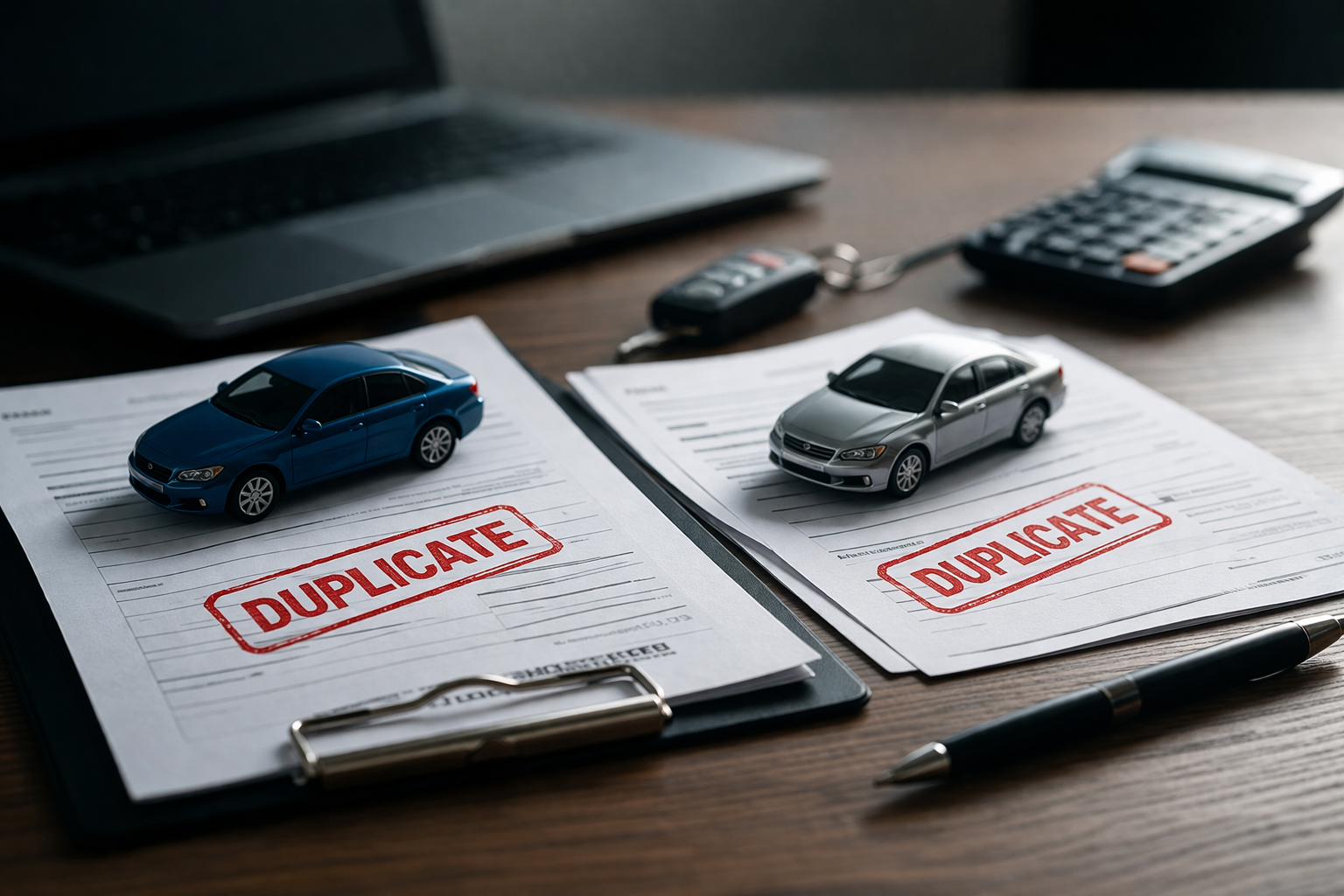
Dealer submitted duplicate auto loan application was the exact phrase I searched after my phone lit up with a second financing alert that made no sense. I had already spent hours at the dealership, already signed paperwork, already been told the deal was moving forward. So when another lender notification appeared with different terms, different numbers, and a different reference ID, I knew this was not a small paperwork glitch.
The strange part was not just that another lender appeared. It was that nobody mentioned it. No call. No explanation. No “we sent this to another bank because the first one was delayed.” Just silence while my name, credit file, and vehicle purchase were apparently being passed around in the background. That is the moment many buyers realize the financing process is not nearly as clean as it looked from the sales desk.
If you are here because Dealer submitted duplicate auto loan application is now your problem too, the confusion is real. You may have one approval, two approvals, multiple inquiries, conflicting lender messages, or a dealership that keeps saying everything is “normal.” Sometimes it is only a messy submission process. Sometimes it turns into duplicate funding risk, billing confusion, credit reporting damage, or a contract dispute over which lender actually owns the deal.
The good news is that this can often be contained if you move early and document everything. The bad news is that waiting for the dealership to sort it out on its own is usually the mistake that makes the situation harder. Once duplicate financing paths start moving past the application stage and into funding, the cleanup becomes slower, more technical, and much more stressful.
If your financing situation also involves a lender that supposedly funded the deal but cannot even confirm the account properly, start here first because that usually signals a backend handoff problem:
Why duplicate applications happen more often than buyers think
Dealer submitted duplicate auto loan application issues usually start inside the dealership’s finance workflow, not at the moment you signed your name. A finance manager may send the same deal to one lender, then another, then a third, especially if they are chasing a better approval, trying to rescue a weak approval, or trying to avoid a deal collapsing after you already took emotional ownership of the car.
In theory, rate shopping across multiple lenders can be part of a normal auto financing process. The real problem begins when the submissions are not controlled properly. Instead of one primary submission and clean withdrawal of the others, the deal can keep moving across multiple portals at the same time. Each lender may generate its own approval path, its own account setup, and its own assumptions about whether the dealership intends to proceed.
The dealership may see this as a funding strategy. You experience it as uncertainty, extra inquiries, and possible duplicate debt exposure.
There are several ways this tends to unfold:
First path: The dealer submits the application to more than one lender at nearly the same time because they want competing approvals quickly.
Second path: The first lender looks slow, so the dealer sends the same transaction to another lender without closing out the original submission.
Third path: The dealer changes the amount financed, down payment, term, rate, or add-ons, and the system treats the update as a fresh application rather than a revision.
Fourth path: A sales desk cancellation happens internally, but the finance office still pushes one or more applications anyway.
Fifth path: A lender asks for conditions, the dealer responds poorly, then resubmits somewhere else while the first lender remains open in pending status.
That is why Dealer submitted duplicate auto loan application can happen even when you only remember one signing session and one conversation about financing. The duplication often lives inside portals, lender queues, and dealership follow-up actions that you never see.
How this usually first shows up to the customer
Most buyers do not discover the issue through a clean explanation from the dealer. They discover it indirectly. A second approval email arrives. A lender calls asking to verify employment even though you thought financing was already done. A credit monitoring service shows extra auto inquiries. A welcome packet appears from the wrong bank. Or the monthly payment amount being discussed suddenly shifts in a way that does not match what you thought you agreed to.
Dealer submitted duplicate auto loan application often becomes visible through one or more of these signs:
- Two or more lender names tied to the same vehicle purchase
- Approval terms that do not match the contract you signed
- A second hard inquiry after you thought the deal was already complete
- A lender asking for stipulations even though the dealership said funding was secured
- Different loan terms being mentioned by text, email, or phone
- A lender saying the file is active while the dealer insists they “went another direction”
The most important clue is not just multiple inquiries. It is multiple active financing tracks with no clear written explanation of which one was actually authorized to proceed.
Where the real danger begins
By itself, an extra application is annoying. The larger problem is what happens next. If the dealer fails to close out the unused lender path, multiple entities may keep processing the transaction as if they are the lender of record. That is where confusion turns into risk.
Inquiry-level impact: You may see extra hard pulls. Sometimes these are grouped for scoring models, sometimes not perfectly, and sometimes the customer still experiences temporary score movement.
Approval-level impact: Two lenders may both believe the deal is available for funding.
Contract-level impact: The dealership may present one contract to you while submitting a different structure to another lender.
Funding-level impact: One loan funds while another remains open, then billing or account setup starts on both sides.
Reporting-level impact: A lender or dealer may report tradeline activity, delinquency, or active financing tied to a deal you never fully accepted in that form.
Dealer submitted duplicate auto loan application becomes especially serious when any of these start happening at the same time: vehicle delivery already occurred, contract copies are missing, the lender name changed after signing, or the dealer keeps avoiding a direct written answer.
What the dealership may say — and what it often means
Dealerships rarely describe the issue in plain language. Instead, you may hear phrases like “we were just seeing what worked best,” “that second inquiry doesn’t matter,” “the first one was only conditional,” or “our finance office is cleaning it up.”
Sometimes those statements are partly true. Often they leave out the part that matters most: whether any unused financing path is still alive.
When Dealer submitted duplicate auto loan application occurs, these common dealership explanations usually mean the following:
“We were shopping rates.”
This may mean multiple lenders were contacted, but it does not answer whether one or more submissions remain active.
“It’s only a backup.”
A backup is not harmless if the lender still sees the file as open and actionable.
“Nothing funded yet.”
That is helpful only if confirmed directly by each lender, not just by the dealer.
“Don’t worry about the second lender.”
That is not enough. You need written confirmation that the unused application was withdrawn or closed.
“The terms changed a little.”
That can mean a new application or different contract structure was sent under your name.
You do not need to accept vague language when your credit profile and auto loan status are involved.
The different patterns this can take
Not every Dealer submitted duplicate auto loan application situation looks the same. Understanding which pattern you are in helps you decide how aggressive your next steps need to be.
Pattern one: extra inquiries, no approvals yet
This is the earliest stage. It is still a problem, but usually easier to contain. Your goal here is to identify all lenders contacted and stop the unused paths before they develop into active approvals or funded accounts.
Pattern two: two approvals, vehicle not delivered yet
You still have leverage. Do not rely on verbal dealer assurances. Make the dealer identify in writing which lender is being used and which lender is being withdrawn.
Pattern three: one approval you expected, one approval you never heard about
This is often where unauthorized term changes or duplicated lender submissions show up. You need copies of the finance documents and direct lender confirmation of what was submitted.
Pattern four: one funded loan, one open pending file
This is dangerous because the dealer may assume the second path will simply die on its own. It might not. Call the second lender yourself and state that you are disputing any further processing.
Pattern five: two lenders both seem to think they have the deal
This is high urgency. At this point, documentation matters more than phone promises. Get account status from both sides, compare VIN, amount financed, and contract date, and escalate quickly.
Pattern six: billing begins or a welcome packet arrives from the wrong lender
That means the duplication is no longer theoretical. It is already moving into servicing and possible credit reporting territory.
What you should ask each lender right now
If Dealer submitted duplicate auto loan application is happening, your best information will usually come from lenders, not the dealer. The dealer controls the story. The lender controls the status.
When you contact each lender, ask these exact questions in plain language:
- Do you show an application, an approval, or a funded loan?
- What lender reference number is tied to my name and this VIN?
- What amount financed and term are attached to the file?
- Is the file pending stipulations, awaiting funding, or already booked?
- Did the dealer send signed contract documents to support this file?
- Can you note in the file that I am disputing any unauthorized duplicate financing path?
What you are trying to do is stop the confusion from staying verbal. Once the lender notes the dispute, it becomes harder for the dealer to act as though the second path is harmless or invisible.
If the lender claims there is a contract you never signed, or a term structure you never approved, preserve that immediately. Those details matter.
If your issue also involves a lender approval that seems to exist in theory but not in a clean, traceable way, this related guide may help you compare what happened:
The fastest way to contain the damage
When Dealer submitted duplicate auto loan application is already in motion, speed matters more than perfect legal language. The first priority is to lock down facts. The second is to create a written trail. The third is to stop any unused financing path from becoming active.
Step 1: Gather every finance-related text, email, contract copy, lender alert, and credit monitoring notice.
Step 2: Make a list of every lender name connected to the deal.
Step 3: Call each lender directly and confirm status.
Step 4: Email the dealership asking which lender is the final lender of record and which submissions have been withdrawn.
Step 5: Ask for written confirmation, not a phone reassurance.
Step 6: Check your credit reports and monitor for new account activity.
The dealership may move slowly. You should not.
Mistakes that make the situation worse
Many buyers accidentally give the problem room to grow. The most common reason is that they assume this is just “dealer back-office stuff” that will sort itself out. Sometimes it does. Too often it does not.
These mistakes are common in Dealer submitted duplicate auto loan application disputes:
- Ignoring the second lender because you think only the signed contract matters
- Accepting verbal assurances without written withdrawal confirmation
- Signing revised documents too quickly just to “clean up” the issue
- Failing to compare VIN, term, rate, and amount financed across all communications
- Waiting until the first payment date to investigate
- Assuming duplicate hard inquiries are the only problem
The biggest mistake is delay. Duplicate financing problems are easier to unwind when they are still in application or pending status.
Your rights as the customer
You are allowed to ask direct questions. You are allowed to demand copies. You are allowed to dispute unauthorized financing activity. And you are allowed to insist that any lender path you did not approve be shut down clearly and traceably.
For official consumer guidance on auto financing, review the Federal Trade Commission resource here: Understanding Vehicle Financing.
That official source will not solve your exact dispute for you, but it supports the basic principle that financing terms, lender identity, and contract structure should be clear to the customer. If the lender or terms changed in a way you did not knowingly approve, that is not something you should brush off.
FAQ
Can a dealer send my application to multiple lenders?
Yes, multiple-lender shopping can happen in auto finance. The problem is not the existence of multiple lenders by itself. The problem is when duplicate active paths are left open, unclear, or inconsistent with what you approved.
Will duplicate applications always hurt my credit badly?
Not always. Some inquiry models group auto loan shopping within a limited time window. But that does not remove the larger risk of duplicate account creation, wrong-lender servicing, or contract confusion.
What if the dealer says the extra lender was only a backup?
Do not rely on that statement alone. Ask the lender directly whether the file is still active and ask the dealer for written confirmation of withdrawal or closure.
What if I already drove the car home?
That makes the situation more urgent, not less. Delivery can create pressure and assumptions inside the dealership process, but it does not erase your right to clarity about who actually financed the deal.
What if two loans end up active?
At that point you should act immediately with both lenders and the dealer. Preserve all paperwork, compare all terms, and dispute any unauthorized or duplicate financing path before billing and reporting spread further.
Key Takeaways
- Dealer submitted duplicate auto loan application is usually not a random glitch; it often reflects an unmanaged lender-submission process.
- Extra inquiries are only the surface problem. The deeper risk is duplicate approvals, duplicate funding, or conflicting contract records.
- Your best source of truth is the lender’s current status, not the dealer’s verbal explanation.
- The earlier you create a written trail, the easier the problem is to contain.
- If another lender is still open, pending, or funded, treat that as urgent.
Recommended Reading
If this financing mess is expanding into a broader contract problem, this next guide helps you understand what happens when a dealership never cleanly finishes the funding path you thought was final:
Right now, the most important move is not guessing whether the dealership “probably fixed it.” The most important move is verifying each lender status one by one and forcing the situation into writing.
Dealer submitted duplicate auto loan application is manageable when you catch it early, compare every lender path carefully, and stop unused submissions before they spread into billing or reporting. Call each lender today, identify which file is active, dispute any financing you did not authorize, and make the dealership confirm the final lender in writing. Do not leave that step for tomorrow.