
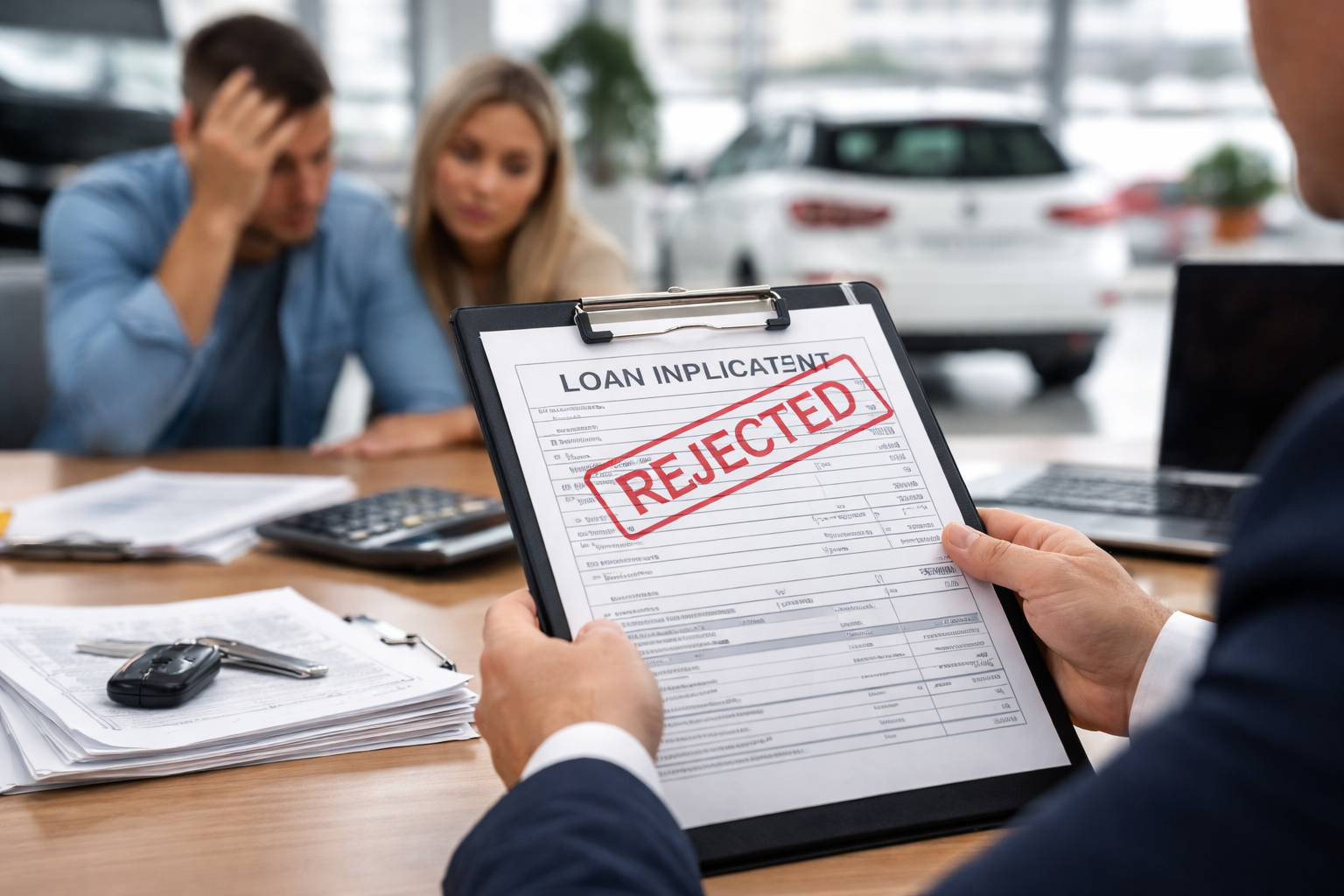
Dealer Submitted Loan But Lender Rejected Due to Income Verification Failure was not the call you expected after finishing the paperwork, handing over your down payment, and leaving the dealership thinking the hard part was over. Usually the moment starts quietly. A finance manager says the lender needs one more document. Then another message comes in. Then the wording changes. Now it is not a small delay. Now the file did not clear because income verification failed. That is the moment a normal car deal turns into a documentation and leverage problem.
Dealer Submitted Loan But Lender Rejected Due to Income Verification Failure feels different from an ordinary financing delay because the deal may already be moving in the real world even though it is no longer stable on paper. You may already have insurance on the vehicle. You may have stopped shopping. Your trade-in may already be gone from your driveway. You may have told your family the purchase is done. The dealership may still speak as if the situation is temporary, while the lender may already view the file as not fundable under the original structure. That gap is where buyers get pushed into bad decisions, rushed signatures, and worse financing terms.
If you want the closest supporting guide on how bad information in the file can create this kind of financing problem, start here before reading further.
Why income verification fails after submission
Dealer Submitted Loan But Lender Rejected Due to Income Verification Failure does not always mean a buyer has no income or cannot afford the vehicle. Often the breakdown happens because the number submitted by the dealer does not match what the lender can verify through supporting documents or internal screening rules. A pay stub may show a different employer name than the application. Overtime may have been counted as stable income when the lender treats it as irregular. Monthly income may have been estimated from a recent high-pay period instead of actual average earnings. A recent job change may make the file look weaker than the dealer expected.
Lenders do not review these files the same way a customer does in the finance office. The dealer may focus on getting the deal approved quickly enough to move the sale. The lender focuses on whether the stated income holds up across the entire file. That can involve pay stubs, bank deposits, employer consistency, time on job, debt obligations, and sometimes direct verification requests. When those pieces do not reconcile cleanly, the lender may reject the deal even after the dealer acted like approval was already in place.
That is why Dealer Submitted Loan But Lender Rejected Due to Income Verification Failure is its own distinct problem. It is not just “financing fell through” in a vague sense. It is a situation where the income side of the application became the pressure point that broke the original structure.
Quick self-check before you respond
- Compare the income number on the application to your actual recent pay records
- Check whether the application used gross pay while you were thinking in net pay
- Look for overtime, commission, tips, or bonus income that may have been counted too aggressively
- Confirm that your employer name, job start date, and pay frequency are consistent everywhere
- See whether the dealer may have rounded up or estimated your monthly income
Why the dealer may have said you were approved
Dealer Submitted Loan But Lender Rejected Due to Income Verification Failure often begins with language that made the deal sound done. Buyers hear “you’re approved,” “the lender is good,” or “all that’s left is funding.” But those phrases are often used loosely at dealerships. Sometimes what actually exists is a conditional approval, a preliminary response, or a working assumption that the income documents will support the numbers already entered.
That difference matters. A deal can look approved enough for the sales process to continue, while still being vulnerable to lender review. The buyer hears certainty. The lender still sees conditions. The dealer may keep moving because the vehicle is sold only if the file funds. Once income verification breaks, the tone changes. Suddenly the same deal may be described as delayed, under review, or rejected. The buyer is then asked to absorb the consequences of a problem that was not explained clearly at the start.
Where buyers lose the most leverage
Dealer Submitted Loan But Lender Rejected Due to Income Verification Failure becomes dangerous when it collides with steps that have already happened outside the contract itself. If you already handed over a trade-in, already gave the down payment, already took the car home, or already changed insurance, you are under more pressure than you were when you first negotiated the deal. The dealership knows that. Many buyers accept new terms not because the new deal is good, but because the unwind feels messy and uncomfortable.
That pressure gets worse when the explanations are vague. A dealer may say the lender “just needs something small,” but then ask for a bigger down payment. Or say the income number “didn’t verify exactly,” then offer a higher interest rate through a different lender. Or ask for a co-buyer without ever showing what failed in the original file. Dealer Submitted Loan But Lender Rejected Due to Income Verification Failure often becomes expensive not at the moment of rejection, but in the rushed conversation that follows it.
Watch these warning signs closely
- You are asked to come back in immediately and sign before you receive copies of the first contract
- The dealer cannot explain whether the lender rejected the file outright or only asked for more documents
- The numbers change at the same time the dealer talks about “verification”
- The monthly payment stays similar but the term gets longer
- A second lender appears without a clear explanation of what happened to the first one
If the dealer is turning the situation into a broader financing collapse, this related guide helps frame what usually happens next.
How this usually breaks in real life
Dealer Submitted Loan But Lender Rejected Due to Income Verification Failure does not always look the same. Some buyers are hourly workers whose recent pay history fluctuated. Some changed jobs recently and the lender did not like the short employment history. Some had overtime included in the application even though the lender did not count it fully. Some discovered that the dealer used a projected number instead of a documented number. Others find out that the application treated side income as stable when the lender wanted a stronger history.
That matters because your response should depend on which version you are dealing with.
If your income is real but the file is incomplete
This is the narrowest version. The issue may be a missing pay stub, a recent address mismatch on payroll documents, a new employer that needs confirmation, or a simple formatting problem. In that situation, Dealer Submitted Loan But Lender Rejected Due to Income Verification Failure may be fixable without changing the economic terms of the deal. You should still get everything in writing, but a clean document correction may solve it.
If the submitted income was overstated or structured too aggressively
This is more serious. If overtime, bonus, gig income, or commission was counted in a way the lender would not accept, the original approval may have depended on a number that was never going to survive verification. In that version, the dealer may try to salvage the deal through a different lender, a larger down payment, or a co-signer. That is not a harmless paperwork fix. That is a changed deal.
If the dealership cannot explain what number failed
This is often where buyers should slow down the most. If nobody will tell you whether the issue is base pay, job history, employer mismatch, or document inconsistency, there is a real risk that the story will shift over time. You should not sign new paperwork until the failure point is clearly identified.
What to do before signing anything else
Dealer Submitted Loan But Lender Rejected Due to Income Verification Failure should push you into documentation mode immediately. Ask the dealer, in writing, for the lender name, the exact reason the file was not funded, whether the lender requested additional stipulations before rejection, and whether the terms of the original deal are still being offered. Ask for copies of all signed documents, including the retail installment contract, credit application if available, and any condition sheet tied to the financing.
Then review your own records. Pull your recent pay stubs, bank statements if relevant, proof of employment, and any messages where income was discussed. Compare those records with what you remember telling the finance manager. If there is a difference, identify whether it was a misunderstanding, an estimate, or a number entered more aggressively than you intended. You need to know whether the file failed because your documents were missing, because your income was interpreted incorrectly, or because the deal was built on numbers the lender would never accept.
Do not treat a new signature as a minor administrative step. If the dealer changes the APR, term length, cash due at signing, lender, or co-buyer requirement, that is not a continuation of the old deal. It is a new negotiation with different economics.
Mistakes that make the situation worse
The biggest mistake is moving too fast after the dealer calls. Buyers often feel embarrassed or worried that the car will be taken back, so they rush to “fix” the file without understanding what actually failed. That is how they end up accepting worse terms, longer terms, or additional obligations that were never part of the original agreement.
Another common mistake is speaking loosely about income after the file is already under stress. Do not guess. Do not casually estimate. Do not send inconsistent numbers by text. If you need to clarify your income, do it carefully and consistently. Dealer Submitted Loan But Lender Rejected Due to Income Verification Failure gets harder to resolve when the correction process creates even more inconsistencies.
It is also a mistake to assume the dealer will naturally protect your interests once the original lender rejects the file. The dealership’s priority is usually to keep the sale alive. Your priority is to protect your contract position, your money, your trade-in, and your credit profile. Those priorities are not always aligned.
Your rights and escalation path
Dealer Submitted Loan But Lender Rejected Due to Income Verification Failure does not automatically mean the dealer or lender broke the law, but it does mean you should preserve every document and communication from the moment the story changed. If the explanation remains vague, the numbers changed without a clear basis, or the dealer refuses to provide copies of what you signed, preserve the full paper trail and communicate in writing.
For an official consumer route, the Consumer Financial Protection Bureau says consumers should try to resolve the issue with the company, keep records of their communications and supporting documents, and submit a complaint if needed.
Official CFPB guidance on auto dealer or lender problems
Key Takeaways
- Dealer Submitted Loan But Lender Rejected Due to Income Verification Failure is different from a generic financing delay because the income side of the file is what broke the deal
- The dealer may have treated a conditional or fragile approval as if it were final
- If the lender rejected the file after submission, you need the exact failure point in writing
- Do not sign a second contract until you know whether the first deal failed because of missing proof, inconsistent income treatment, or a deeper restructuring problem.
- If terms change, treat it as a new negotiation, not a minor correction
FAQ
Can Dealer Submitted Loan But Lender Rejected Due to Income Verification Failure happen even if I have a good job?
Yes. The problem is often not whether you work, but whether the income number in the file matches what the lender can verify under its rules.
Does this always mean the dealer lied?
No. Sometimes it is a real document issue. But sometimes the income was estimated, overstated, or structured more aggressively than the lender would accept. That is why written clarification matters.
Should I provide more pay stubs right away?
You can provide documents, but only after you understand whether the original deal terms are still intact and what exactly the lender said was missing or inconsistent.
What if I already drove the vehicle home?
Then you should move even more carefully. Delivery gives the dealer more practical leverage, but it does not remove your need to document what happened and understand whether the deal was ever truly fundable on the original terms.
What if they ask for a co-signer now?
That usually means the original structure no longer works as submitted. Treat that as a major change, not a minor paperwork request.
Recommended Reading
If this financing problem starts spilling into account status, reporting, or post-deal cleanup issues, this is the next guide worth reading.
Dealer Submitted Loan But Lender Rejected Due to Income Verification Failure is one of those problems where buyers lose the most not because the lender said no, but because they let the meaning of that no stay vague. Once the explanation becomes fuzzy, every follow-up request sounds reasonable even when the economics are getting worse. The more precisely you define what failed, the harder it becomes for the other side to rewrite the situation in a way that costs you more money.
So act today, not after another phone call. Ask for the lender name, the failure reason, the supporting terms, and copies of what you already signed. Compare that to your actual income records before agreeing to any new deal. If the original structure failed, you need to know whether it failed because of missing proof, bad input, or a financing model that was never as solid as it sounded. That is how you protect your leverage before this turns into a worse contract, a longer loan, or a much harder unwind.