
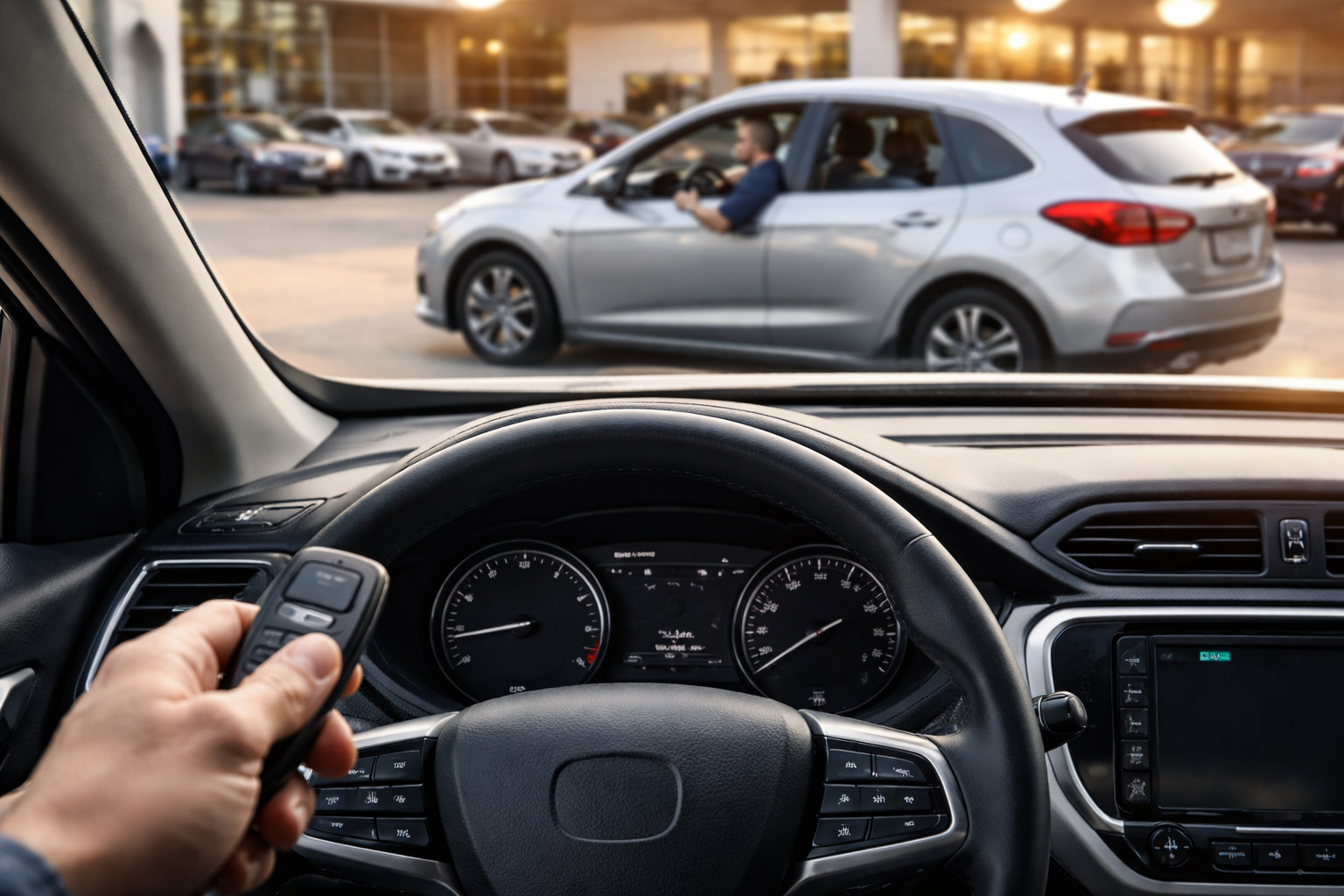
Dealer Test Drove My Car Without Permission was not a phrase I expected to be searching that afternoon. I picked the car up thinking the hard part was over. The service visit itself had already been inconvenient enough. I signed the paperwork, got in, and before I even backed out of the parking space, something felt off. The seat was farther back than where I left it. The climate settings were changed. One of the radio stations was different. It was small, but it was enough to make me stop and look more carefully.
Then I checked the mileage. That was the moment the situation became real. The number on the dashboard was higher than it should have been, not by one or two miles, but enough to make me wonder where the car had been and why no one had said anything. At that point, Dealer Test Drove My Car Without Permission no longer felt like a suspicion. It felt like the beginning of a dispute that could get harder to prove the longer I waited.
When a dealership drives your vehicle without clearly documented authorization, the issue is not limited to extra mileage. It becomes a control, liability, and credibility problem.
That matters because dealership service disputes often become difficult for one reason: the customer notices something is wrong only after the vehicle has already been returned. Once that happens, the dealership may argue that the mileage change, damage, warning light, tire issue, fuel loss, or interior condition happened after pickup. That is why this kind of article needs to do more than explain the problem. It needs to help you place your own situation into the right category immediately.
Before you deal with the service advisor, manager, or manufacturer, it helps to understand how dealership service responsibility problems usually unfold after a vehicle is returned.
This related guide explains how service accountability disputes are often framed when the dealership tries to distance itself from what happened after the vehicle entered the service lane.
What usually happens inside the service department
In a normal dealership workflow, a customer drops off the vehicle, the advisor opens a repair order, the vehicle is assigned to a technician, and the technician performs an inspection, diagnosis, or repair. In some situations, a short road test may be part of that process. That is not unusual by itself. The problem starts when the dealership treats that road test as automatic, undefined, or too broad.
Most customers never see the internal boundaries. They are not shown whether the road test was actually written into the repair order, whether the issue required driving at all, who took the vehicle out, how far it was driven, what route was used, or whether a manager approved it. So when Dealer Test Drove My Car Without Permission becomes the issue, the real question is not simply whether the car moved. The real question is whether the dealership can justify the scope and purpose of that movement based on the service visit you authorized.
A short, repair-related verification drive is one thing. Unexplained mileage, unrelated use, or a drive outside the repair purpose is something else entirely.
This distinction is where many customers lose leverage. They argue emotionally about unauthorized use in general, while the dealership answers with a vague statement like “we had to test drive it.” If you do not separate a legitimate diagnostic drive from an excessive or unrelated one, the dealership gets to control the narrative.
How to tell which kind of situation you are actually dealing with
Not every situation where Dealer Test Drove My Car Without Permission means the dealership misused the vehicle in the same way. You need to place your situation accurately, because the next step depends on what signs you noticed.
If the mileage increased only slightly
If the vehicle was being diagnosed for braking noise, transmission hesitation, suspension vibration, steering pull, warning lights that appear while driving, or an intermittent issue that only happens on the road, a short drive may have been part of normal service. In that situation, your goal is not to accuse first. Your goal is to confirm whether the repair order supports what they did and whether the distance was reasonable.
If the mileage increase was large
If the car came back with 10, 15, or more added miles and the repair itself did not obviously require that kind of road use, the issue becomes harder for the dealership to explain. At that point, Dealer Test Drove My Car Without Permission may involve excessive use rather than a simple verification drive. That raises stronger questions about purpose, supervision, and policy compliance.
If the vehicle settings were changed
Seat position, mirrors, climate control, drive mode, navigation history, music settings, or connected phone history can help show that the vehicle was actively used rather than briefly moved. These details matter because they make the event more concrete. They also help distinguish a short lot maneuver from a real road drive.
If fuel dropped noticeably
A noticeable fuel drop can support your timeline, especially if the dealership later minimizes the distance driven. It is not the strongest evidence by itself, but when combined with mileage, trip data, or connected vehicle logs, it can reinforce the pattern.
If new damage appeared
This is where the matter becomes much more serious. If Dealer Test Drove My Car Without Permission and the vehicle also came back with wheel damage, curb rash, body scratches, bumper marks, interior mess, warning lights, tire wear, or mechanical symptoms that were not there before, then you are no longer dealing only with an authorization question. You are dealing with a service-return damage dispute.
That is why it helps to read this related situation if your vehicle came back with a condition change after service.
Where dealerships usually try to protect themselves
When customers raise this issue, dealerships often respond with one of a few predictable explanations. Understanding them helps you stay focused.
The first is the broad explanation: “We had to road test it.” Sometimes that is true, but the phrase is often used without detail. You should not stop there. Ask what symptom required the road test, who conducted it, how many miles were driven, and whether that was recorded anywhere in the repair order or technician notes.
The second explanation is softer: “That is standard procedure.” The problem with that response is that it tells you nothing about whether the procedure matched your specific repair visit. Even if road testing is common, it still needs to be connected to your service purpose.
The third explanation is defensive: “It was only a few miles.” This is where your own photographs and records matter. If Dealer Test Drove My Car Without Permission and the distance was more than minor, vague minimization becomes easier for them if you do not have contemporaneous evidence.
The fourth explanation is procedural delay: “Let us look into it and call you back.” That is not necessarily bad, but it becomes a problem when you leave without making sure your complaint was documented in writing on the same day.
The dealership’s strongest position is your uncertainty. Your strongest position is a same-day written record tied to the repair order.
What to do before you leave the dealership lot
If you notice the issue while still on site, do not drive away first and address it later. Handle the documentation immediately.
Do these steps in order
- Photograph the odometer clearly
- Photograph the repair order, invoice, and pickup paperwork
- Photograph any changed vehicle condition you can see right away
- Take screenshots of trip logs, GPS history, app alerts, or connected vehicle data if available
- Write down the time you picked the car up and the exact explanation you were given
- Ask the advisor whether a road test was performed and by whom
- Ask that your concern be added to the service file or repair order notes
Do not rely on memory. After an uncomfortable conversation, details blur quickly. If Dealer Test Drove My Car Without Permission, your timeline is one of the most valuable things you have.
How to handle each version of the problem
This is where many articles stay too general. The right response changes depending on what happened after the vehicle was driven.
When the issue is mileage only
Keep your approach narrow. Ask for a mileage explanation, a copy of the technician notes, and confirmation of whether a road test was required for the complaint you brought in. Do not overstate the issue. Your aim is to force the dealership to tie the drive to the work order. If they cannot do that clearly, your position gets stronger.
When the issue includes fuel, settings, or route history
This version often suggests a longer or less controlled use of the vehicle. Ask the dealership to explain why the drive required that distance and whether there is a standard diagnostic route. If your car’s app shows locations unrelated to the dealership’s test route, preserve those records immediately.
When the issue includes a ticket, toll, or camera violation
Do not assume the problem will sort itself out. If a red-light camera, toll bill, parking issue, or other notice later arrives tied to the period when the vehicle was at the dealership, connect that notice to your service documentation right away. A vague complaint about unauthorized use is much weaker than a documented timeline matched to a specific event.
When the issue includes a crash or physical damage
This is no longer just about permission. It is about vehicle condition, fault, repair responsibility, and potentially insurance. Photograph everything immediately, ask for the service manager, and request that the dealership preserve internal records, including who moved or drove the vehicle. Do not let the discussion stay verbal if damage is involved.
When the dealership becomes evasive
If answers become vague, inconsistent, or delayed, move the conversation upward. Ask for the service manager, then the general manager if necessary. Keep the complaint factual and time-based. “I dropped the vehicle off at this time, the mileage was this, I picked it up at this time, the mileage was this, and I need the dealership’s written explanation.” That structure is much more effective than general frustration.
What not to do if you want the problem taken seriously
There are several mistakes that weaken customers even when the dealership is clearly in the wrong.
Do not start with a threat if you have not preserved evidence. Do not exaggerate the mileage if you are unsure. Do not accept a verbal apology and then leave without anything documented. Do not wait several days and then try to reconstruct the situation from memory. And do not let the discussion drift into general complaints about trust, respect, or “how this should never happen” before establishing the basic facts.
In dealership disputes, the customer who appears most organized is often treated as the one whose complaint has to be taken seriously.
That does not mean being aggressive. It means being precise.
How this issue differs from other dealer disputes on your site
This topic does not materially overlap with your price, financing, title, or loan-submission posts. Structurally, it sits in the service accountability lane, not the sales-contract lane. It is closest to return-condition and post-service responsibility issues, especially the pages about new damage after service, refusal to fix the car after service, same problem returning, or the dealership denying responsibility after repair.
So from an indexation standpoint, this keyword is not heavily duplicative of your contract-change or fee-addition content. To keep it distinct, this article should stay centered on unauthorized vehicle use during service, internal road test boundaries, documentation, liability exposure, and immediate evidence preservation. That makes it meaningfully different from warranty-denial pages and from broader repair-quality disputes.
Key Takeaways
- Dealer Test Drove My Car Without Permission is not always the same type of problem; the right response depends on mileage, vehicle condition, and supporting evidence.
- A legitimate diagnostic road test should still match the repair purpose and be defensible under the repair order.
- Large mileage increases, changed settings, route history, fuel loss, or new damage make the issue more serious.
- Same-day documentation is what prevents the dealership from shifting the timeline later.
- Your goal is not to argue first. Your goal is to lock the facts in place before the explanation changes.
Questions people usually ask right away
Can a dealership ever drive my car without asking me separately?
Sometimes a short road test is part of a normal diagnosis or repair verification process. But if Dealer Test Drove My Car Without Permission and the distance or use seems unrelated to the actual service, the dealership may have a harder time justifying it.
What if the repair order does not clearly mention a road test?
That does not automatically prove wrongdoing, but it gives you an important point to ask about. The dealership should be able to explain why driving was necessary and how the scope of that drive was controlled.
What if I noticed only after I got home?
Document the mileage and condition immediately anyway, gather any app data or trip history you have, and contact the dealership the same day if possible. Delay weakens your timeline.
What if my car came back with another problem after the drive?
Then your issue may no longer be just unauthorized use. It may also be a post-service damage or unresolved repair problem that needs its own written documentation trail.
Official source
For general consumer information about auto repair rights and documentation practices, review the Federal Trade Commission’s auto repair guidance: FTC Auto Repair Basics.
What to read next
If the dealership refuses to explain what happened, minimizes the issue, or tries to deny responsibility after the vehicle was in its possession, this next guide can help you see how that pattern usually develops.
And if your experience is broadening beyond the drive itself into a larger post-service dispute, this follow-up guide helps frame the next stage of action before the record becomes harder to control.
Dealer Test Drove My Car Without Permission may sound at first like a minor complaint about mileage, but that is usually not how these situations unfold. The real risk is that an undocumented drive creates uncertainty about where the vehicle was, how it was used, whether anything happened during that time, and who is responsible if a larger issue appears later. Once the car is back in your possession, that uncertainty starts working in the dealership’s favor unless you act quickly.
The smartest move is to make the problem specific before it becomes debatable. Photograph the mileage. Preserve the paperwork. Ask for the dealership’s explanation while you are still close enough in time for the records to matter. If needed, escalate calmly to the service manager and insist that your concern be noted in writing. Do not leave the issue as a vague suspicion when it can still be turned into a documented event.
If you are reading this because Dealer Test Drove My Car Without Permission and you have just noticed the signs, your next move should be immediate and practical: gather the odometer proof, review the repair order, contact the dealership today, and ask for a written explanation tied to the service visit. That is the step that protects you if the story changes later.