
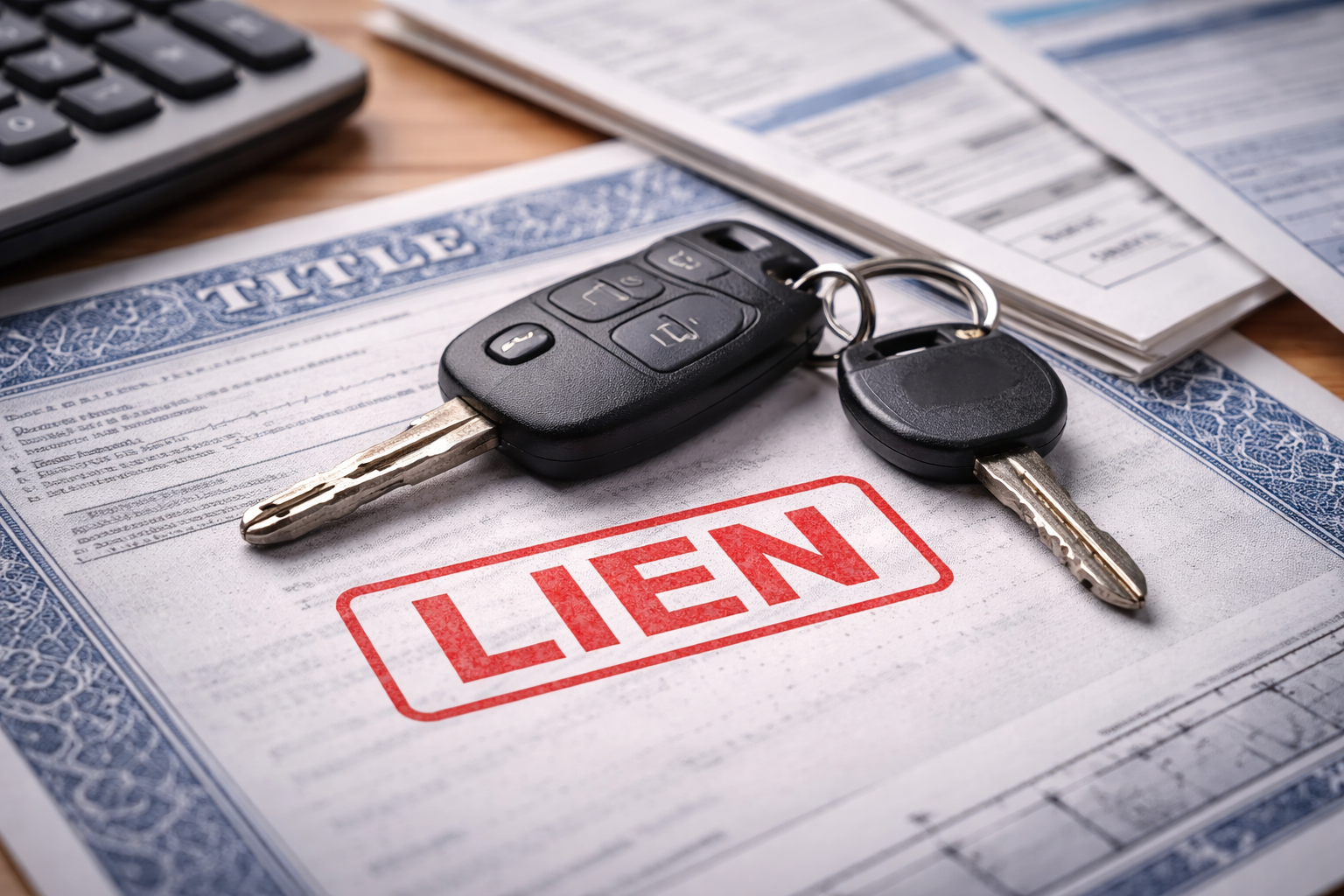
Dealer failed to remove lien from title after trade-in payoff was the phrase I ended up searching only after I thought the whole trade-in deal was behind me. The old car was gone. The new one was already in my driveway. The monthly payment I used to watch for on the traded vehicle had stopped. From the outside, everything looked finished.
Then the problem showed itself in the worst possible way—late, unexpectedly, and in a place I was not prepared for. I was trying to wrap up another routine step tied to the vehicle history, and suddenly I was being told the old lien was still sitting on the title record. Not “maybe.” Not “pending review.” Still there. That was the moment it became obvious that a trade-in payoff and a clean title are not the same event, even if the dealer talks like they are.
When a dealer says the prior loan was paid off, most customers naturally think the title is now clear. But the actual chain is messier. Money can move before records move. A lender can close an account before a lien release gets transmitted. A dealer can mark the trade-in file completed before the DMV ever receives what it needs. And while all of that is happening, the customer is usually the last person to find out there is a gap.
If this is happening to you, the most important thing to understand is that this usually is not one dramatic act of fraud or one single obvious clerical error. It is often a handoff failure between systems that do not automatically clean up after each other. The transaction feels complete to everyone in conversation long before it becomes complete in title records.
If you want the closest related explanation of what happens when the payoff side itself breaks down, read this first and compare your situation:
Why this happens after a trade-in even when the dealer says payoff was completed
Dealer failed to remove lien from title after trade-in payoff usually sits in the space between financial completion and title completion. Those are related, but they are not identical. The payoff amount may have been sent. The lender may have cashed it. The dealer may have checked an internal box showing the trade-in obligation was resolved. Yet none of those steps automatically guarantee that the lien was released correctly and pushed all the way through to the state title record.
There are usually three moving parts here: the dealer or dealer title processor, the lender that held the prior lien, and the state title or DMV system. In many states, those parties interact through a mix of electronic lien systems, manual verification, payoff letters, release batches, mailed documents, and title vendor workflows. When one stage stalls, the next stage often does nothing. No alarm goes off for the customer. No one rushes to tell you the chain stopped. The file just sits there.
If your situation sounds familiar, it usually falls into one of these paths:
- The payoff was sent, but the lender never completed the lien release step.
- The lender released the lien internally, but the state title system never received or accepted it.
- The dealer assumed the lender would handle everything and never verified title clearance.
- The dealer’s title vendor received the release, but the owner, VIN, or account data did not match exactly.
- The prior lien was paper-based, but everyone acted as if it were electronic.
That is why vague reassurance from the dealer does not solve anything. “We paid it off already” may be true and still be useless. The real question is not whether the balance was paid. The real question is whether the lien release was issued, transmitted, received, accepted, and reflected on the title record.
The part customers usually do not see
Dealer failed to remove lien from title after trade-in payoff becomes so frustrating because the problem stays invisible until you try to do something that depends on a clean title. Sometimes that is a resale. Sometimes it is refinancing. Sometimes it is a registration or ownership-related step that suddenly exposes the old lien. By then, weeks or months may have passed, and each party speaks as if the issue belongs somewhere else.
The dealer may say the payoff cleared a long time ago. The lender may say the loan account is closed. The state may say the lien remains active because no release was posted to the title record. Each side sounds finished. But your title is still not clear. This is one of those situations where every party can sound technically correct while the customer is still stuck with a broken outcome.
That is also why you should not start by arguing abstract responsibility. Start by locating the exact stage where the chain broke. Once you know that, the fix becomes much faster and much more precise.
How to tell where the chain actually broke
Dealer failed to remove lien from title after trade-in payoff can usually be narrowed down quickly if you ask the right questions in the right order. Most people lose time because they ask whether the car was paid off. That is too broad. It invites vague answers. You need narrower questions tied to each system handoff.
Start with the lender. Ask for the payoff posting date, but do not stop there. Ask whether the lien was released, on what date it was released, whether the release was electronic or paper, and whether there is any confirmation number, letter, or internal notation showing that release was transmitted out. If the lender representative can only confirm the account balance is zero, that is not enough.
Then contact the state title or DMV office, or check the title record through the available state process. You want to know whether the lien still appears active, whether any release is pending, and whether a prior release submission was rejected. Rejection matters because many customers assume “not updated yet” when the reality is “received but unusable.” Those are very different problems.
After that, go back to the dealer and ask what proof they have that the title was cleared after payoff. If they used an outside title processor or vendor, ask whether the file was ever returned for correction. The dealer may not volunteer that unless you ask directly.
Ask these exact things:
- What date was the payoff posted?
- What date was the lien release issued?
- Was the release electronic or paper?
- Was the release sent to the state, mailed, or handed back to a title vendor?
- Did the DMV reject any submission tied to this VIN or owner record?
- Who was supposed to complete the final title clearance after the payoff closed?
Once you separate payoff from release, and release from title update, the confusion usually starts to break apart.
The most common patterns behind this problem
Dealer failed to remove lien from title after trade-in payoff usually lands in one of several recurring patterns, and each one requires a slightly different approach.
One pattern is the delayed lender release. Here, the dealer truly did send the payoff funds, and the old loan account really is closed, but the lender’s lien release workflow was not completed. This can happen when the lender processes payoff in one department and lien releases in another, often on a different timeline. Customers hear “paid in full” and assume title clearance is done. It is not.
Another pattern is the electronic lien mismatch. The lender may have released the lien through an ELT system, but the data tied to the VIN, owner name, account, or state record does not match what the title system expects. The release can then fail quietly or sit unresolved while the active lien continues to show.
A third pattern is dealer-side file closure. The dealer marks the trade-in obligation handled once the payoff clears their internal checklist. From their point of view, they no longer have the old car problem. But no one verified that the title actually became clear. That last verification step is often where the customer gets abandoned.
There is also the paper title situation. Some older or state-specific files still require physical documents or a mailed release. In those situations, the lender may mail something to the wrong place, the dealer may assume the state received it, or the state may wait for a document that never arrives. Everyone thinks someone else is carrying the file forward.
And then there is the rejected submission path. This is one of the most overlooked versions. A release may already have been attempted, but it failed because the owner information was inconsistent, the lienholder name was off, the title record had a typo, or the state required a different format. That means time passes without progress, even though someone technically “did something.”
What the dealer will often say, and what it usually means
Dealer failed to remove lien from title after trade-in payoff often comes with familiar phrases that sound reassuring but do not actually answer the problem.
If the dealer says, “We already paid the bank,” that only addresses the money movement. It does not prove lien release. If they say, “The lender takes care of that,” it may be partially true, but it does not tell you whether the dealer verified completion. If they say, “These things take time,” that may be fair for a short period, but it does not excuse indefinite silence when the lien remains active well after ordinary processing time.
If the dealer says the title department is looking into it, ask what exactly they are waiting on. A person who is genuinely working the file should be able to tell you whether they are waiting on a release letter, a state correction, a resubmission, or lender confirmation. Specific answers usually indicate progress. Vague answers usually indicate assumption.
This matters because you need to decide quickly whether to keep pushing the dealer, escalate the lender, or go directly to the state with supporting proof.
If your situation also involves title-processing errors more broadly, this related article can help you compare whether the issue moved beyond lien release and into ownership transfer trouble:
What actually fixes it fastest
Dealer failed to remove lien from title after trade-in payoff is rarely solved by passively waiting for a callback. The fastest resolution usually comes from building your own proof chain and closing the gap yourself.
Get written proof from the lender first. Not a casual phone assurance. Ask for a lien release letter, release confirmation, satisfaction notice, or any official document that shows the lien was released or should be released. If the lender uses an electronic lien process, ask for the exact release date and whether a reference or confirmation identifier exists.
Then verify what the state needs in order to clear the title. In some places, a release letter is enough. In others, the release has to come through a specific electronic channel. In others, there may be a correction form or duplicate title process involved if the original file stalled. This is where direct contact with the state system matters. You do not want to spend another two weeks sending the wrong proof to the wrong person.
Once you know what the state requires, circle back to the dealer and make the request narrower. Do not ask them to “fix everything.” Ask them to provide the missing document, resubmit the rejected item, correct the title data, or confirm in writing that the payoff was completed and the lien release should have been processed. That makes it harder for the file to drift back into vague promises.
Your practical action path:
- Get written payoff and release proof from the lender.
- Confirm with the state exactly what is missing.
- Ask the dealer for the specific missing correction, not a general promise.
- Keep copies of every email, release notice, and title-related record.
- Do not close the issue until the title record itself shows the lien is gone.
The goal is not to win an argument. The goal is to create a clean document trail that forces the file to move.
Mistakes that turn a short delay into a long one
Dealer failed to remove lien from title after trade-in payoff becomes much harder when customers rely on verbal comfort instead of document-based confirmation. One common mistake is assuming a zero balance means a clean title. Another is assuming the dealer’s title office has already checked what the state record shows. Another is waiting too long because the problem does not seem urgent until the vehicle needs to be sold, transferred, or refinanced.
It also hurts when customers only talk to one side. If you speak only with the dealer, you may never learn the lender failed to issue the release. If you speak only with the lender, you may never learn the release was sent but rejected by the state. If you speak only with the state, you may know what is wrong but still lack the document needed to cure it. The problem is tripartite. The response has to be the same.
A related situation that can help you think through lingering active-lien records after the dealer believed the trade-in was handled is here:
Your rights when the lien is still showing
Dealer failed to remove lien from title after trade-in payoff is not just an annoying paperwork issue. It can interfere with ownership, sale timing, financing, registration handling, and the ordinary use of a vehicle record. Once the prior obligation is satisfied, the title record should reflect reality within a reasonable processing period.
You do not need to accept endless circular explanations. You are entitled to clear information about whether the payoff was completed, whether the lien was released, and what remains to be done to clear the title. If the situation drags on or no one takes ownership of the correction, you may need to escalate using your state’s motor vehicle or consumer complaint channels. For a general official starting point on title matters, see USA.gov’s vehicle title guidance.
FAQ
How can the loan be paid but the lien still be on the title?
Because payoff closes the debt, but lien release and state title update are separate steps that can lag, fail, or be rejected.
Is this always the dealer’s fault?
Not always. The dealer may have completed the payoff, while the lender delayed release or the state rejected the update. But the dealer should not be treated as automatically finished just because funds were sent.
Should I wait longer before pushing?
A short processing period can be normal, but once the lien remains active beyond ordinary timing, waiting usually makes the problem harder rather than easier.
What proof matters most?
Written payoff proof, written lien release proof, and direct confirmation of what the state title record currently shows.
Key Takeaways
- Dealer failed to remove lien from title after trade-in payoff is usually a broken handoff, not a single-event mistake.
- Payoff, lien release, and title update are separate stages.
- The problem often sits between lender records, dealer follow-up, and DMV acceptance.
- The fastest path is written proof plus direct verification with the state.
- Do not treat “paid off” as proof that the title is clear.
What to do now before this gets worse
Dealer failed to remove lien from title after trade-in payoff is one of those problems that feels administrative until it suddenly blocks something important. That is why the right move is not to keep waiting for a general update. The right move is to force the missing link into the open.
Call the lender and request written release proof. Check the state title status directly. Go back to the dealer with precise questions and demand a precise correction. Save everything. Follow the record, not the reassurance. The issue is not solved when someone says it should be fixed. It is solved when the title record no longer shows the lien.