
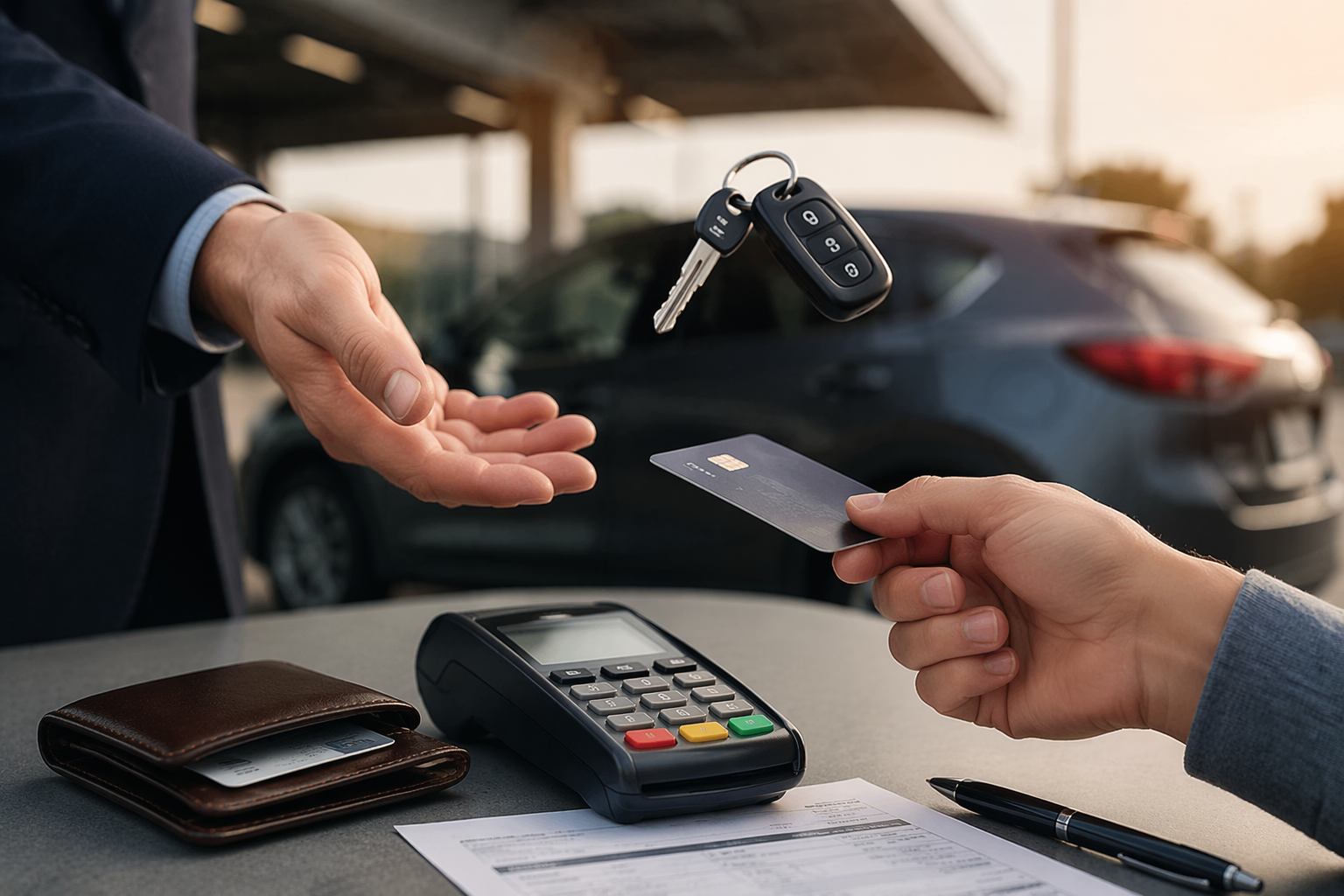
Rental Car Payment Completed but Still Charged? I noticed it when I checked my card a second time, not when I returned the car. The first charge was already there, which matched what I expected. Then another amount showed up from the same rental company. It was not a huge number at first, but it should not have existed at all. I had already dropped the car off, taken my things out, and moved on. That was the moment the problem became real.
Rental Car Payment Completed but Still Charged? The frustrating part was how normal everything looked at the counter and in the app. The payment had gone through. I had no warning about damage, no late return conversation, no manager call, nothing that suggested a dispute was coming. But the system still behaved as if the rental had not fully ended. That is where many people lose time: they treat this like a simple extra charge when the real issue is often that the rental contract never closed properly in the background.
If you want the closest broader guide first, start here. It helps place this problem inside the larger rental dispute pattern and can save time if your charge later gets re-labeled by the company:
What is really happening when the payment is done but charges continue
Rental Car Payment Completed but Still Charged? In many rental systems, payment completion and rental closure are not the same event. A payment can be processed on your card while the rental agreement itself remains open in the company’s operating system. When that happens, the system may keep calculating time, fees, or balance adjustments because it still believes the vehicle has not been fully checked back in.
This is why the charge can look so confusing. You are not always seeing a random duplicate. You may be seeing the result of an “open rental” status, a delayed vehicle check-in, a branch-level processing lag, or a mismatch between the payment side and the contract side. If the contract remains open, the system can continue generating charges even after your payment appears complete.
This distinction matters because it changes what you need to ask for. If you only argue about the money, you may get a generic answer. If you ask whether the rental was formally closed, whether the vehicle was checked in, and whether a final zero-balance invoice exists, you get much closer to the real issue.
The most common patterns behind this problem
After-hours return
You dropped off the vehicle when the branch was closed. Your card activity updated quickly, but the actual return was not reviewed until later. The contract stayed open during that gap, and additional rental time or related fees were generated.
Payment posted before vehicle check-in
The company processed your payment or hold adjustment before an employee completed the physical return workflow. Internally, the vehicle and the billing status moved on different timelines.
Third-party booking disconnect
You prepaid through a travel platform or broker, but the rental company’s own record still showed an unresolved item or an active contract. The outside booking looked settled while the internal rental file did not.
Hold versus final charge confusion
What looked like a completed payment on your card was partly an authorization, adjustment, or pending settlement. Then a second transaction appeared after the branch finalized the file incorrectly or too late.
Manual branch delay
A busy location simply did not close the contract when it should have. This is more common than many people think, especially on weekends, holidays, and airport turnovers.
Rental Car Payment Completed but Still Charged? These are different versions of the same core failure: the financial side and the operational side did not stay synchronized.
How this looks from the rental company side
Rental Car Payment Completed but Still Charged? From your side, the matter feels settled because the car is gone and the money moved. From the company side, the system may still show an active rental or an incomplete return event. Once that happens, support agents often read from the screen rather than from the real-world timeline.
That is why you may hear language like “the rental was still open,” “the final bill updated after review,” or “the branch processed the return later.” Those answers can sound evasive, but they usually reveal the real path of the error. The company is not always claiming you rented longer on purpose. It is often saying the system never got a proper end signal when it should have.
Official rental policies also make clear that return handling can depend on branch procedures and timing. For a general example of how late or delayed return handling may be processed, see the official Enterprise policy page: Enterprise late return policy.
How to tell whether you are dealing with an open contract instead of a simple extra fee
Rental Car Payment Completed but Still Charged? Start by checking documents, not just your bank app. A card transaction alone does not tell you whether the rental file was actually closed.
- Look for a final rental receipt, not just a payment confirmation
- Check whether the document shows the return time and closed contract details
- See whether your online rental account still shows an active or recently modified trip
- Compare the drop-off time, the first payment time, and the later extra charge time
- Review whether the charge description changed from pending to final after the return
If you cannot find a final closed invoice with the correct return timestamp, assume the contract may still be open or may have been closed late and incorrectly.
How to sort your situation quickly before you contact anyone
If the extra amount looks like one more rental day
This usually points to late check-in or delayed contract closure.
If the amount changed from a hold to a larger final total
This may involve hold release timing, fuel, toll, or a branch-side adjustment that was added after return processing.
If there is a second charge with a different code or posting description
This can indicate the first transaction was not the final rental settlement at all.
If the company says the return was processed the next day
That often supports your argument that the system timing, not your conduct, created the added amount.
If the charge appeared after a broker or travel-site booking
The problem may sit at the handoff between the third-party reservation and the rental company’s own contract file.
Rental Car Payment Completed but Still Charged? The faster you identify which lane you are in, the easier it becomes to ask the right question instead of getting trapped in generic customer-service replies.
What to ask for when you contact the branch
Rental Car Payment Completed but Still Charged? Call the rental location if possible, not only the national customer service line. The branch often controls the return record, the vehicle check-in note, and the contract closure details.
- Ask whether the rental agreement is marked closed
- Ask what exact time the vehicle was checked back in
- Ask whether the final invoice was generated at return or later
- Ask what created the second charge specifically
- Ask for the final itemized receipt showing zero remaining balance if they fix it
Do not frame the conversation only as “you double charged me.” A better approach is: “I returned the vehicle at this time, payment was already completed, but I now see another charge. Please confirm whether the rental contract stayed open in the system and send me the final closed invoice.”
This wording matters because it forces the company to address the status of the rental file, not just the existence of a charge.
When the facts split into different paths
You returned the car during open hours and still got charged more
Your position is stronger here. The company had the ability to inspect and close the rental promptly. Ask why the branch failed to finalize the return when the car was already back in their control.
You used an after-hours drop-off
Your best angle is timing and fairness. You are not always arguing that no later processing was allowed. You are arguing that the resulting additional charge does not reflect the real rental use if the car was physically returned as instructed.
You prepaid through a platform
Focus on proving that the reservation payment and the rental company’s local file did not align. Ask the rental company to identify what was still open in their system despite the prepaid booking.
You only have a screenshot of the card charge
You need more. Get the rental agreement, return confirmation, photos of the drop-off if available, and any email that shows the vehicle was returned on time.
The company now mentions damage, cleaning, fuel, or tolls
Your issue may be expanding into a different dispute category. Do not let them collapse all post-return charges into one explanation if the actual extra amount came from a delayed open-rental status first.
If the company starts shifting the explanation toward damage instead of contract closure, compare it with this guide so you can separate the issues cleanly:
What not to do in the first round
Rental Car Payment Completed but Still Charged? A few common reactions make the situation harder to fix.
- Do not assume the first posted card amount was definitely the final settled rental invoice
- Do not wait several billing cycles hoping the issue will correct itself
- Do not begin with an angry general accusation if you have not asked whether the contract stayed open
- Do not rely only on a call; ask for the final corrected invoice by email
- Do not file a card dispute first if the branch is clearly able to close and correct the rental quickly
A premature chargeback can freeze the conversation into a payment fight before the branch addresses the real operational mistake. Sometimes that is necessary later. It is not always the smartest first move.
What actually resolves this fastest
Rental Car Payment Completed but Still Charged? The cleanest solution is usually very specific: the branch confirms the true return time, closes or corrects the contract, reverses any improper additional rental-time charge, and sends you a corrected final receipt.
If they agree the vehicle was returned earlier than the system reflects, that is usually the turning point. Once the timeline is corrected, the extra charge often becomes much harder for them to defend.
If the branch does not cooperate, move upward with a simple evidence package:
- Your original rental agreement
- Your return date and estimated return time
- Any photo, text, email, parking record, or travel record that supports when the vehicle was returned
- Your card statement showing the first completed payment and later added charge
- Your written request for the final corrected invoice
The goal is to show that possession ended when you say it ended, even if the company processed the paperwork later.
How this article stays separate from your other rental posts
This topic does not overlap heavily with your existing “late fee after return due to processing delay” angle because this piece is built around a different reader intent. That earlier angle centers on a late-fee outcome and timing mechanics. This article centers on a completed payment that misled the customer into thinking the file was finished when the contract remained open. The structure here is about payment-versus-closure separation, open-rental status, contract-finalization evidence, and branch workflow failure. That difference is meaningful enough to keep the article distinct.
For readers who later discover the company is calling the added amount a cleaning issue instead of continued rental time, this companion guide helps them compare what changed:
FAQ
Why was I charged after my payment was already completed?
Because the payment finishing on your card does not always mean the rental contract was closed in the company’s system. If the file remained open, more charges could be generated.
Is this the same as being double charged?
Not always. It can look that way, but often the second charge comes from a contract that stayed open too long or was finalized incorrectly after return.
What is the most important document to get?
The final closed invoice showing the correct return time and the final balance. That document usually tells you more than the card activity alone.
Should I contact the branch or the main customer service line?
Start with the branch when possible because branch staff often control the check-in record and closure timing. If that fails, escalate with written documentation.
Should I dispute the charge with my card company right away?
Not always. First try to confirm whether the contract was left open or closed late. If the company refuses to correct a documented error, a card dispute may become more appropriate.
Key Takeaways
- Rental Car Payment Completed but Still Charged? Payment completion does not always mean the rental contract was closed.
- An open rental file can keep generating charges even after the customer believes everything is finished.
- The strongest questions are about contract status, return timestamp, and final invoice details.
- Branch-level delay, after-hours return, and booking-system mismatch are common causes.
- The fastest resolution is usually a corrected contract closure and a new final receipt, not just a vague refund promise.
Rental Car Payment Completed but Still Charged? If that is what you are seeing, the safest assumption is that the car may have been returned, but the rental file did not end when it should have. That is why the charge feels irrational. The money moved, but the system never caught up properly.
Rental Car Payment Completed but Still Charged? Do this now: contact the rental location, ask whether the contract is formally closed, request the exact check-in time, and demand the final itemized invoice in writing. That gives you the best chance to stop additional charges quickly and puts you in a stronger position if the company refuses to correct the record.